
Blog
Finance operations, decoded.
How finance teams run payables, the close, compliance and reporting across entities and countries. Written from the mechanism, not the vocabulary.
 ERP What is Agentic ERP? How AI Agents Run Finance Operations Agentic ERP is an ERP in which AI agents do the operational work inside each process, while people approve anything that moves money or files a return. Dhatri Medarametla 3 min
 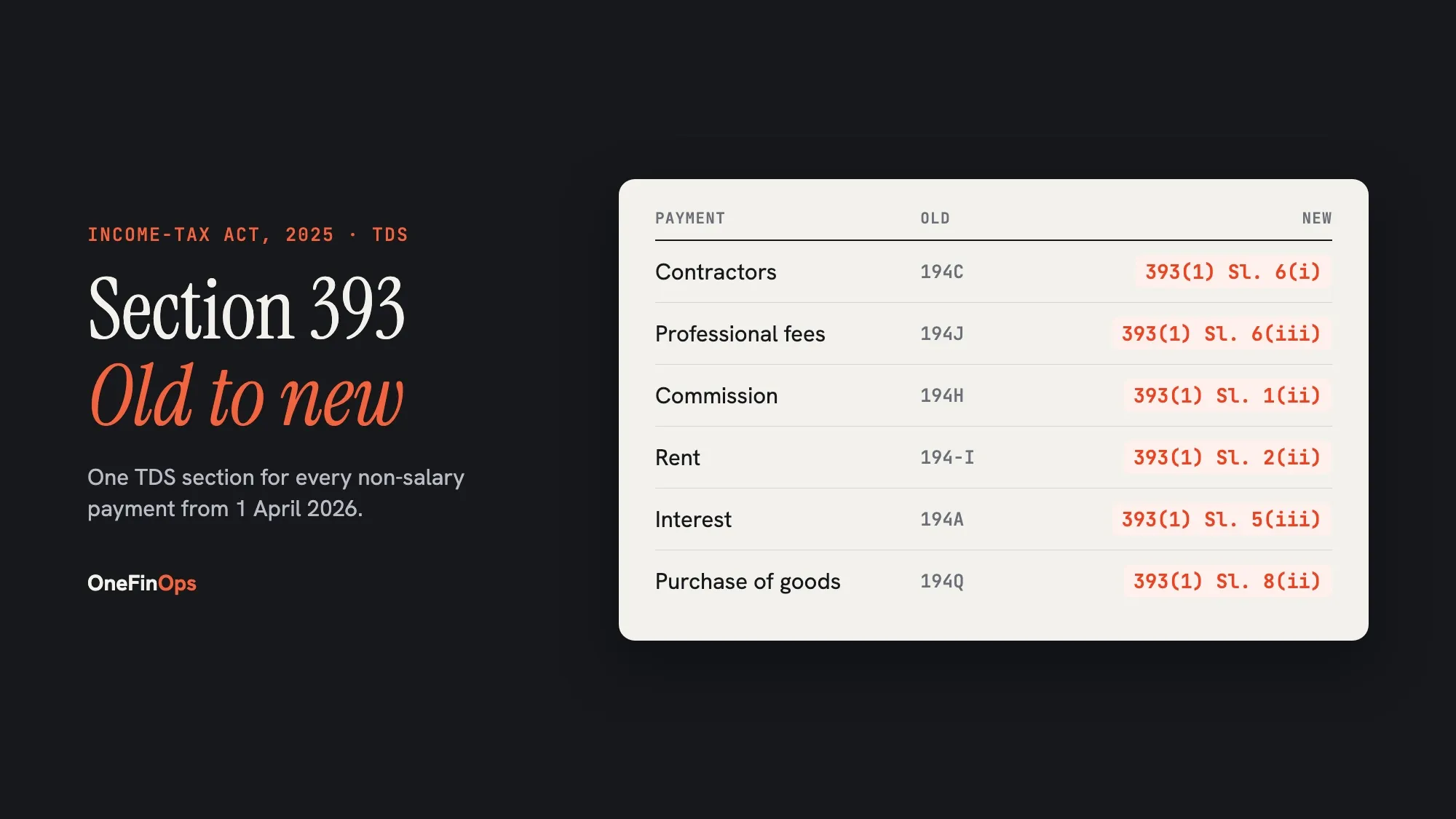 TDS Section 393 of Income Tax Act 2025: TDS Rates and Old-to-New Section Mapping Section 393 of the Income Tax Act 2025 is the single TDS section for non-salary payments from 1 April 2026, replacing 193, 194 to 194T and 195. OneFinOps Editorial 4 min
  GST GSTR-9 and GSTR-9C: Applicability, Due Date and Late Fees GSTR-9 is mandatory above ₹2 crore turnover and GSTR-9C above ₹5 crore. Both are due 31 December 2026 for FY 2025-26. OneFinOps Editorial 3 min
  ERP What is a Bank Reconciliation Statement? Format, Steps and Example A bank reconciliation statement (BRS) explains the gap between the cash book balance and the bank statement balance on a date, item by item, until they agree. Dhatri Medarametla 3 min
  Procurement What is Spend Management? Process, Examples and Tools Spend management is how a company plans, approves, controls, pays and analyses all its spending: vendors, subscriptions, cards and employee expenses. OneFinOps Editorial 2 min
  AP Vendor Reconciliation: Process, Format and Example Vendor reconciliation matches your ledger for a supplier with its statement and explains every difference, such as payments in transit, TDS and debit notes. OneFinOps Editorial 3 min
  TDS What is TDS? Meaning, Rates and How It Works TDS (tax deducted at source) is income tax the payer deducts from a payment such as salary, fees, rent or interest and deposits with the government. OneFinOps Editorial 3 min
  AR Order to Cash (O2C) Process: Steps, Cycle and KPIs The order to cash (O2C) process covers every step from a customer order to collecting and recording payment: order, credit, delivery, invoicing and collections. OneFinOps Editorial 3 min
  TDS Section 194Q: TDS on Purchase of Goods Under the New Act Section 194Q is now 393(1) Sl. No. 8(ii), code 1031: a buyer with turnover above ₹10 crore deducts 0.1% on purchases above ₹50 lakh from a seller. OneFinOps Editorial 2 min
  GST GSTR-2B vs GSTR-3B Reconciliation: How to Match ITC GSTR-2B vs GSTR-3B reconciliation checks that the ITC you claim in Table 4 of GSTR-3B agrees with GSTR-2B, with every difference explained. OneFinOps Editorial 3 min
  AP Accounts Payable Process: Steps, Flow Chart and Controls The accounts payable process runs from purchase order to payment: receive the invoice, match it, book it with GST and TDS, approve, pay and reconcile. Dhatri Medarametla 3 min
  AP What is 3-Way Matching in Accounts Payable? Process and Example 3-way matching checks the purchase order, goods receipt note and supplier invoice against each other, so you pay only for what you ordered and received. Dhatri Medarametla 3 min
 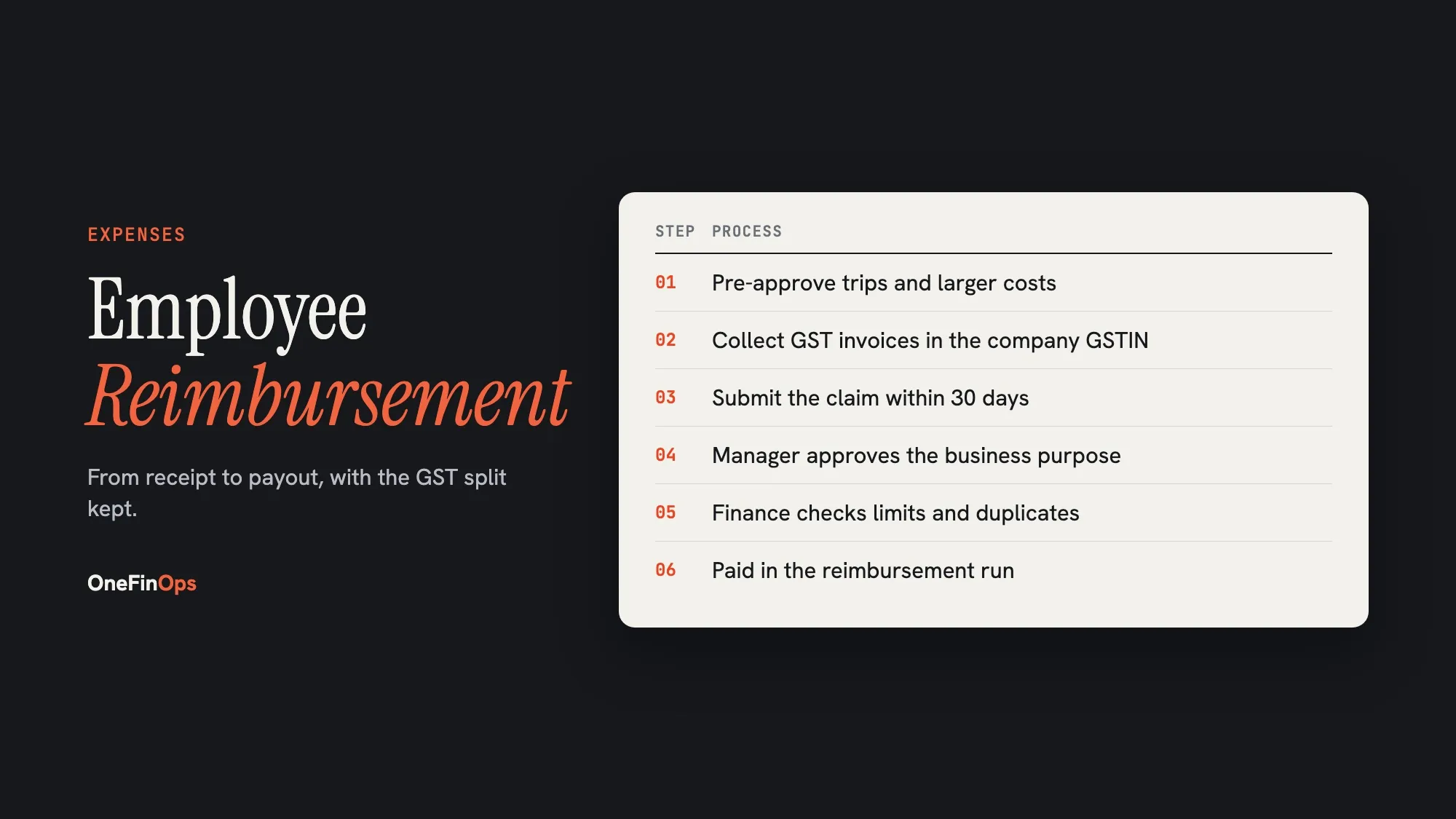 Expenses Employee Reimbursement: Process, Policy and Journal Entry Employee reimbursement is the company paying back business expenses an employee paid personally, against bills. See the process, tax rules and journal entry. OneFinOps Editorial 2 min
  Procurement What is Procure to Pay (P2P)? Process, Cycle and Steps Procure to pay (P2P) is the cycle from a purchase request to supplier payment: requisition, purchase order, goods receipt, invoice matching and payment. Dhatri Medarametla 3 min
  Vendors What is Vendor Management? Process, Lifecycle and KPIs Vendor management is how a business selects, onboards, contracts, pays, monitors and exits suppliers, so each delivers what was agreed, at the agreed price. OneFinOps Editorial 3 min
  GST E-Invoice Applicability and Turnover Limit under GST E-invoicing applies to every GST-registered business whose PAN-level aggregate turnover crossed ₹5 crore in any year since 2017-18. OneFinOps Editorial 3 min
 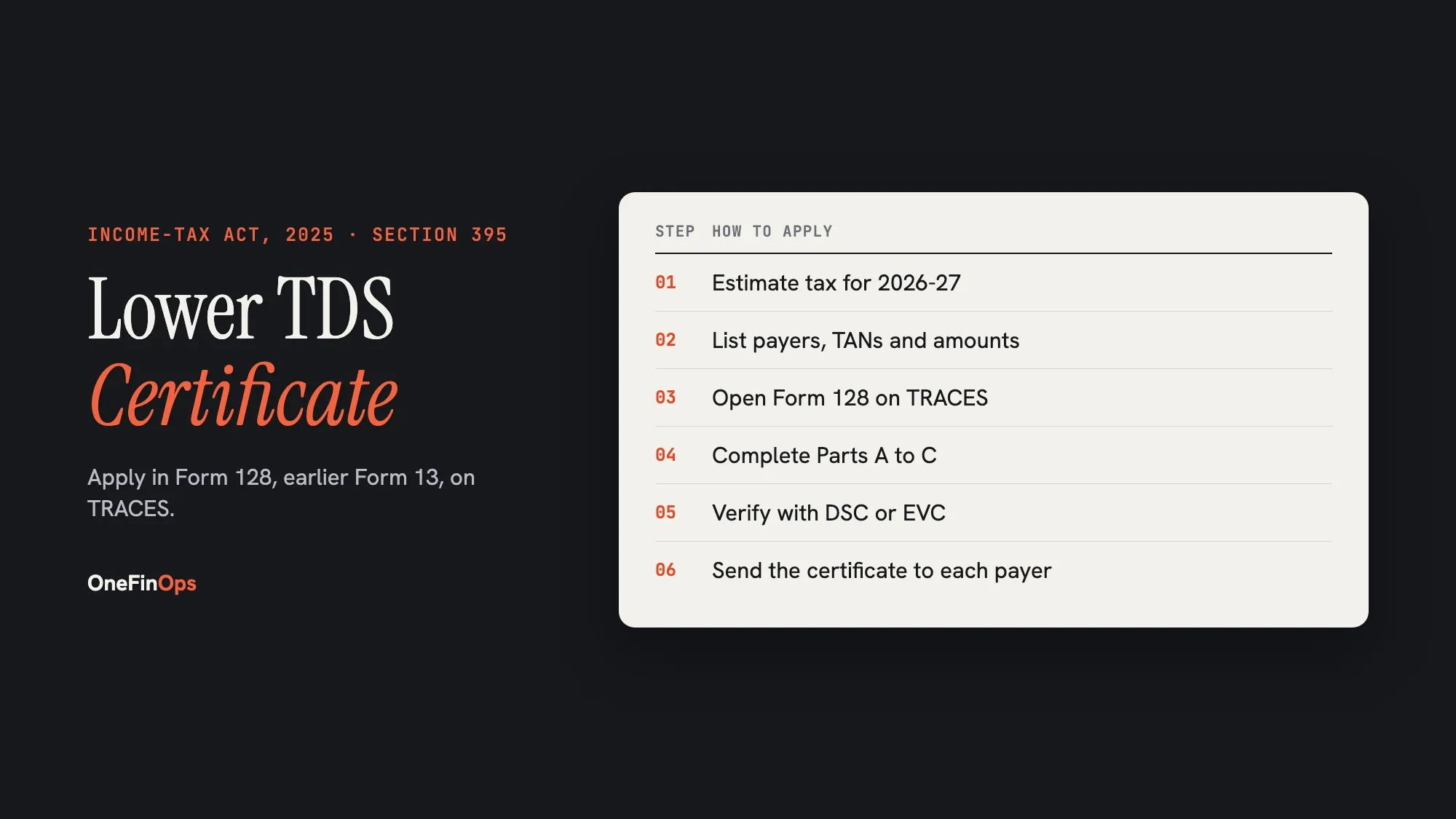 TDS Lower TDS Certificate: Form 128 (Earlier Form 13) and How to Apply A lower TDS certificate lets your payer deduct at a lower or nil rate. From 1 April 2026 you apply in Form 128 (earlier Form 13) under section 395(1). OneFinOps Editorial 3 min
  AR What is DSO? Days Sales Outstanding Formula and Example DSO (days sales outstanding) is the average number of days a business takes to collect payment after a credit sale. See the formula, example and how to cut it. OneFinOps Editorial 3 min
 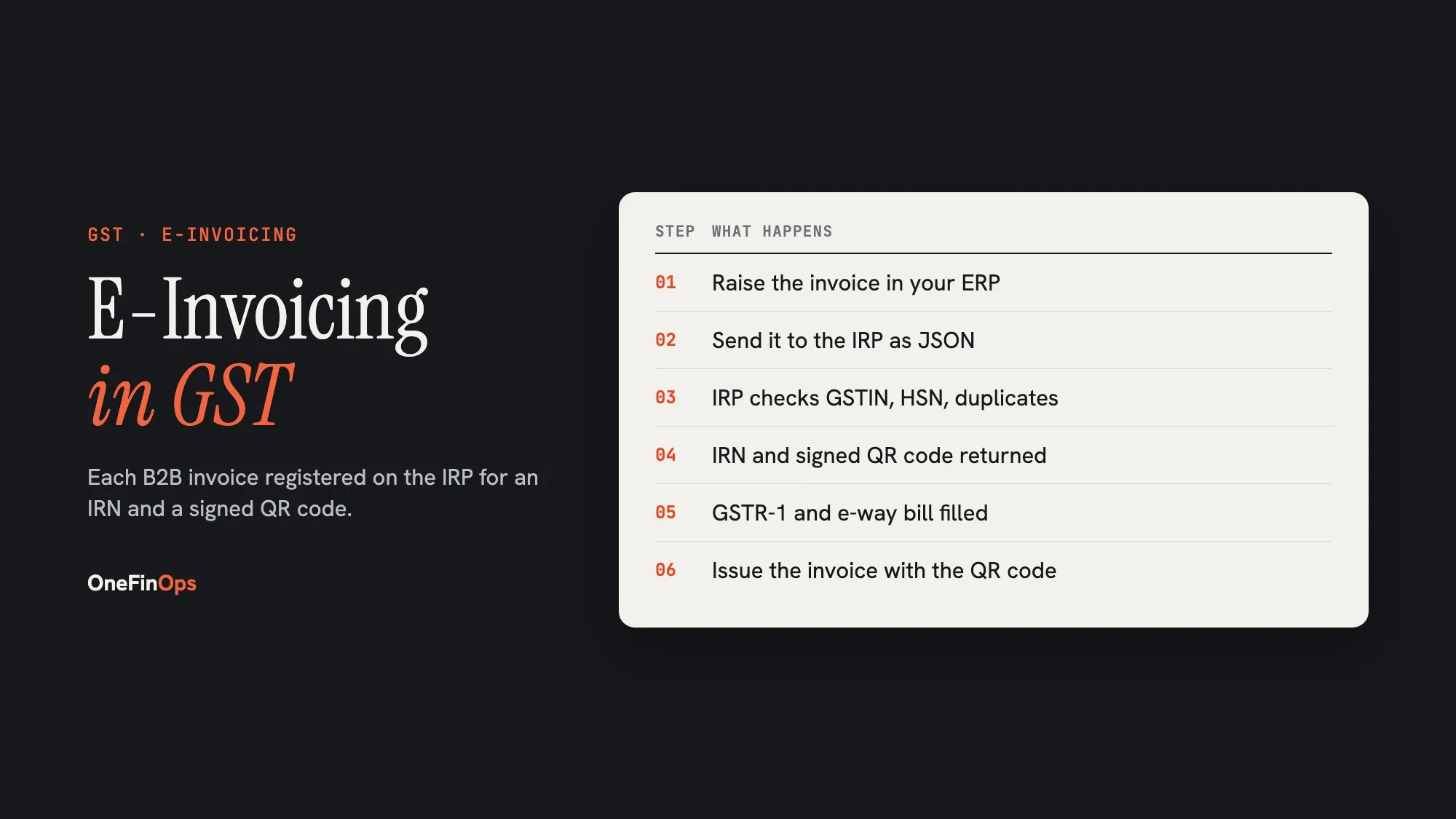 GST What is E-Invoicing in GST? IRN, Process and Rules E-invoicing in GST means reporting each B2B invoice to a government Invoice Registration Portal, which validates it and returns an IRN and a signed QR code. OneFinOps Editorial 3 min
  ERP What is ERP? Meaning, Modules and Examples ERP (enterprise resource planning) is software that runs finance, procurement, sales, inventory and reporting on one shared database, so teams share records. Dhatri Medarametla 2 min
  AP What is Accounts Payable? Meaning, Examples and AP vs AR Accounts payable is the money a business owes suppliers for goods or services received but not yet paid. See the meaning, AP vs AR and the journal entry. Dhatri Medarametla 3 min
  Expenses Expense Policy for Employees: Template and Examples An expense policy sets what employees can claim, the limits by grade and city, the bills needed and who approves. Copy this template for Indian companies. OneFinOps Editorial 3 min
  Procurement What is a Purchase Order? Format, Process and PO vs Invoice A purchase order (PO) is the document a buyer sends a supplier to confirm what it is buying, in what quantity, at what price and terms, before delivery. OneFinOps Editorial 3 min
  Vendors Vendor Risk Assessment: Process, Checklist and Framework Vendor risk assessment rates a supplier's compliance, financial, operational, data and reputational risk into a score and tier that set approval and controls. OneFinOps Editorial 3 min
 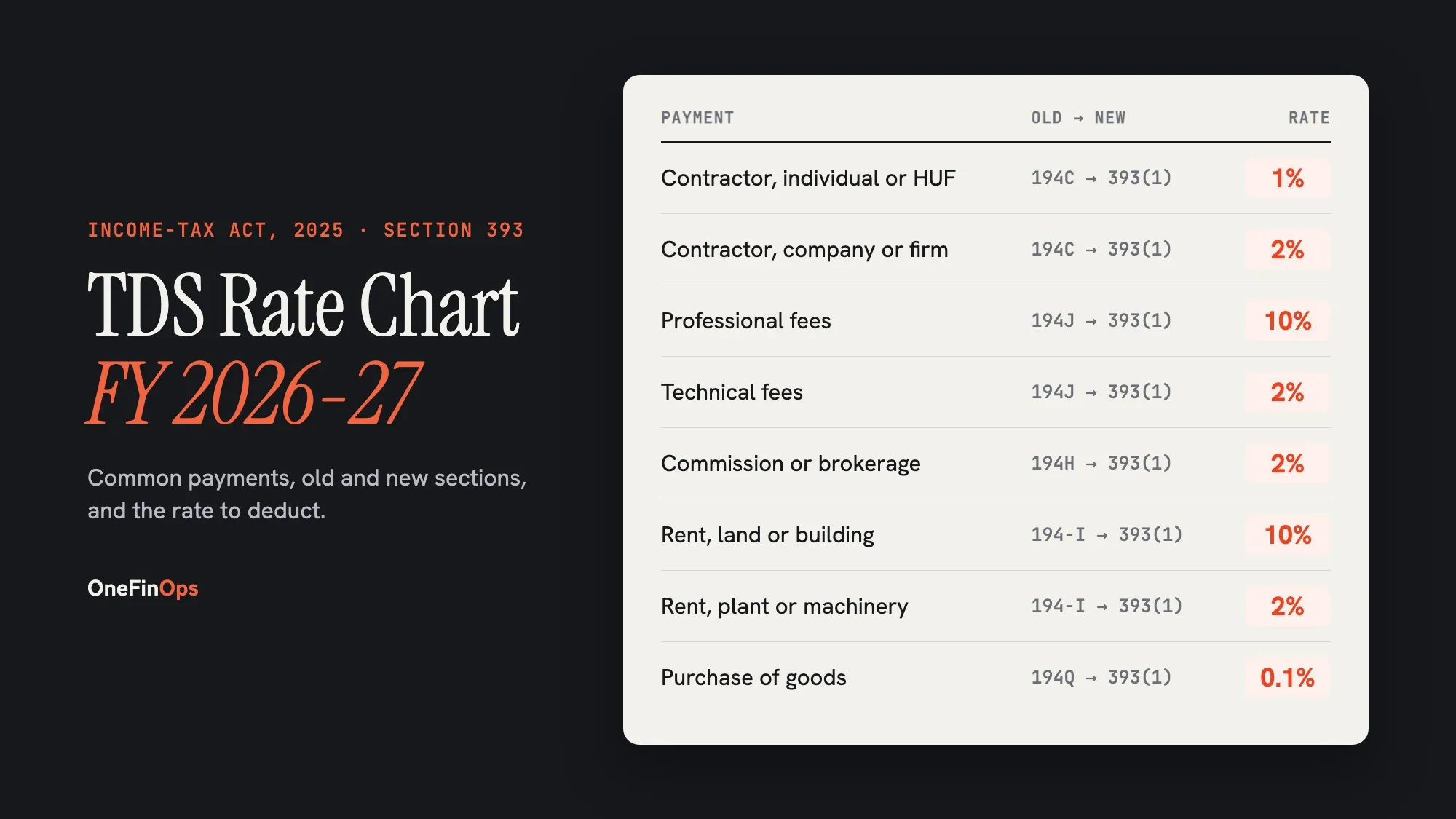 TDS TDS Rate Chart FY 2026-27 (Income Tax Act 2025) TDS rates for FY 2026-27: contractors 1% or 2%, professional fees 10%, rent 2% or 10%, goods 0.1%, with thresholds, section 393 rows and payment codes. OneFinOps Editorial 3 min
  AR What is an AR Aging Report? Format, Example and How to Read It An AR aging report lists unpaid customer invoices grouped by how long they are overdue: 1-30, 31-60, 61-90 and 90+ days. It shows which balances to chase first. OneFinOps Editorial 3 min
  GST What is Input Tax Credit in GST? Conditions, Example and Rules Input tax credit is the GST paid on business purchases that you deduct from the GST you owe on sales, if the section 16 conditions are met. OneFinOps Editorial 3 min
  MCA ROC Filing: Forms, Due Dates and Fees for Companies ROC filing is filing annual and event-based forms with the Registrar of Companies. For FY 2025-26, AOC-4 is due by 29 October and MGT-7 by 29 November 2026. OneFinOps Editorial 3 min
  AP Invoice Processing in Accounts Payable: Steps and Automation Invoice processing is how a business receives, checks, codes, approves and books supplier invoices before payment, including GSTIN, e-invoice and TDS checks. Dhatri Medarametla 3 min
  Expenses What is Expense Management? Process, Policy and Software Expense management is how a business captures, checks, approves, pays and books employee spending on travel, meals, fuel and small purchases. OneFinOps Editorial 3 min
  Procurement Procurement Process: Steps, Types and Flow Chart The procurement process is the set of steps a business follows to buy goods and services: identify the need, source a supplier, order, receive, pay and review. OneFinOps Editorial 2 min
  Compliance Compliance Calendar FY 2026-27 for Private Limited Companies The FY 2026-27 compliance calendar lists every GST, TDS, advance tax, PF, ESI, income tax and ROC due date a private limited company must meet, month by month. OneFinOps Editorial 4 min
  Vendors Vendor Onboarding Process: Checklist, Documents and Form Vendor onboarding is how a business collects, verifies and records a new supplier's PAN, GSTIN, Udyam status and bank account before the first order or payment. OneFinOps Editorial 4 min
  ERP Month-End Close Process: Steps and Checklist The month-end close is how finance records, reconciles and reviews a month so the books can be locked. Steps, a GST and TDS checklist, and a close calendar. Dhatri Medarametla 3 min
  TDS TDS Due Dates FY 2026-27: Payment and Return Filing TDS for FY 2026-27 is deposited by the 7th of the next month (30 April for March). Quarterly returns are due 31 July, 31 October, 31 January and 31 May. OneFinOps Editorial 3 min
  ERP What is a Chart of Accounts? Structure, Types and Example A chart of accounts is the numbered list of every ledger a business posts to, grouped into assets, liabilities, equity, income and expenses, with a sample. Dhatri Medarametla 3 min
 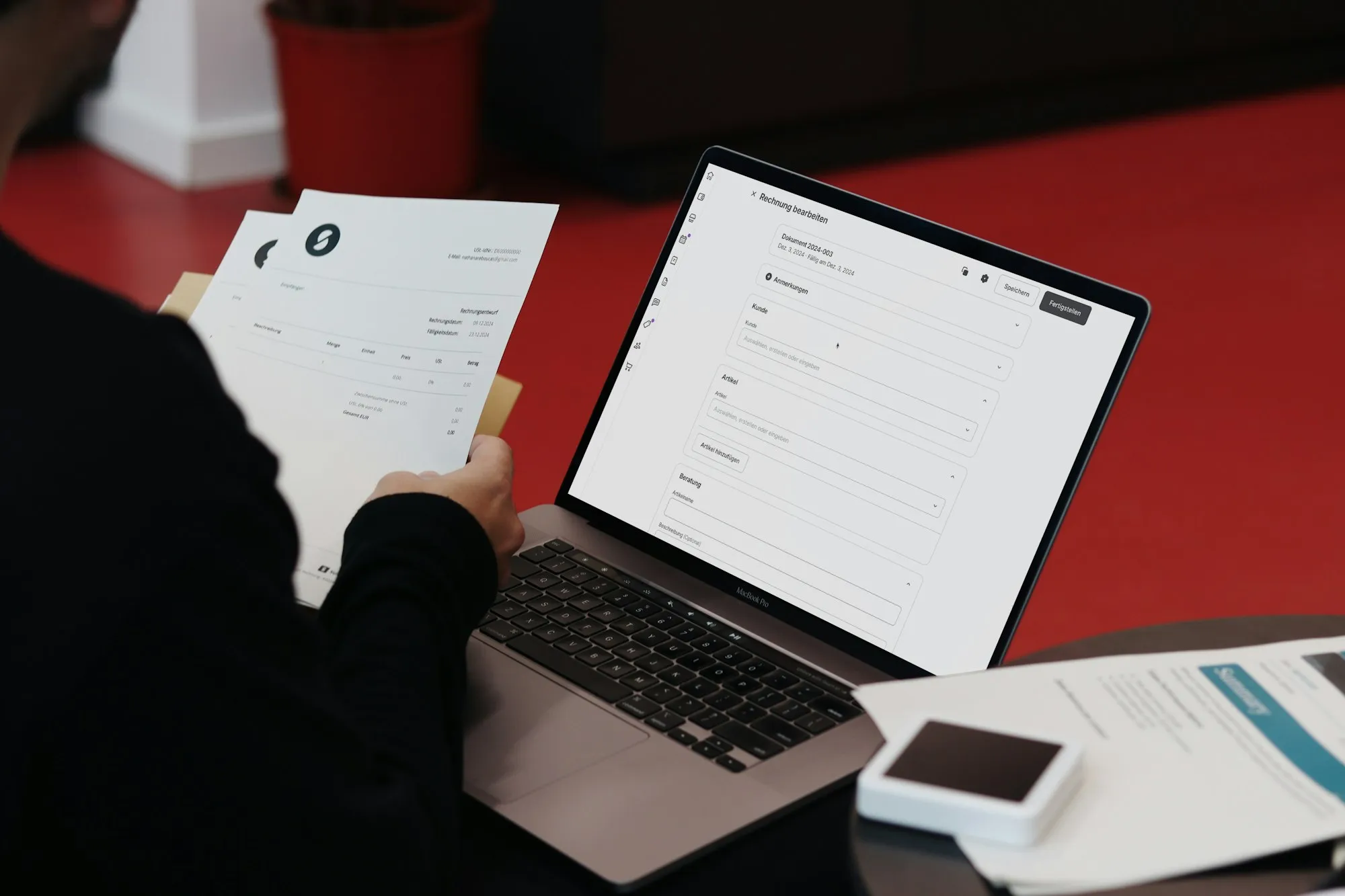 AR What is Accounts Receivable? Meaning, Process and Examples Accounts receivable is money customers owe for goods or services already delivered on credit. See AR vs AP, the journal entry with GST and TDS, and the process. OneFinOps Editorial 2 min
  MCA DIR-3 KYC: Due Date, Fees, Penalty and How to File Every DIN holder files DIR-3 KYC Web with MCA once every three years, by 30 June, from 31 March 2026. On time is free; late filing costs ₹5,000. OneFinOps Editorial 3 min
  GST GST Reconciliation: Meaning, Types, Process and Excel Format GST reconciliation is matching your books with GST returns: sales with GSTR-1, purchases with GSTR-2B, and both with GSTR-3B, before you file. OneFinOps Editorial 3 min
  MCA AOC-4 and MGT-7: Due Date, Fees and Penalty AOC-4 is due within 30 days of the AGM and MGT-7 or MGT-7A within 60 days: 29 October and 29 November 2026 for FY 2025-26. OneFinOps Editorial 3 min
  AP What is AP Automation? How Accounts Payable Automation Works AP automation is software that captures, checks, matches, books and pays supplier invoices, so your team handles only the exceptions and the approvals. Dhatri Medarametla 3 min
  TDS TDS Return Filing: Forms 24Q, 26Q, 27Q and Due Dates TDS return filing is the quarterly statement of every deduction. From 2026-27, Forms 24Q, 26Q, 27Q and 27EQ become Forms 138, 140, 144 and 143. OneFinOps Editorial 3 min
  Compliance Statutory Compliance Checklist for Companies in India A statutory compliance checklist lists every filing Indian law requires of a company, with due dates: Companies Act, GST, TDS, PF, ESI and professional tax. OneFinOps Editorial 3 min
 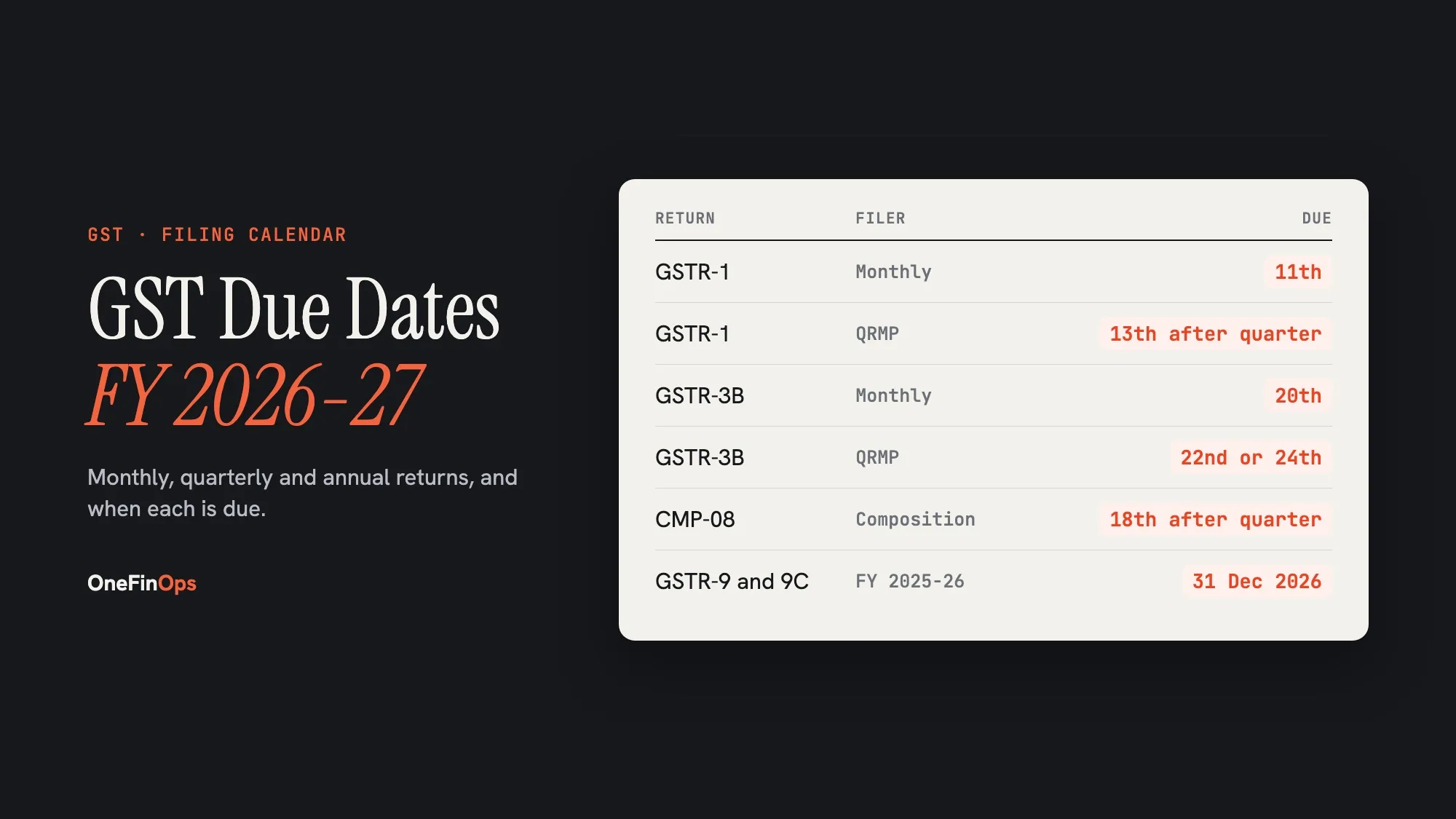 GST GST Due Dates FY 2026-27: GSTR-1, GSTR-3B and GSTR-9 Calendar GST due dates FY 2026-27: GSTR-1 by the 11th, GSTR-3B by the 20th, QRMP GSTR-3B by the 22nd or 24th, and GSTR-9 for FY 2025-26 by 31 December 2026. OneFinOps Editorial 3 min