Definition
An expense audit is the process of examining employee expense claims and reimbursements to verify that they are accurate, legitimate, properly documented, compliant with company policy, and aligned with applicable tax regulations. Expense audits can be conducted as part of routine internal controls (ongoing sampling), periodic internal audits (quarterly or annual reviews), or external statutory audits conducted by chartered accountants under the Companies Act, 2013.
For Indian businesses, expense audits serve a dual purpose: internal cost control and regulatory compliance. From a tax perspective, auditors verify that expenses claimed as business deductions under Section 37(1) of the Income Tax Act are genuinely incurred for business purposes, that GST input tax credit claims under Section 16 of the CGST Act are supported by valid tax invoices, and that TDS has been correctly deducted and deposited for applicable vendor payments under Sections 194C, 194H, 194I, and 194J. During a tax assessment, the Assessing Officer can disallow expenses that lack proper documentation or do not meet the ‘wholly and exclusively for business’ test.
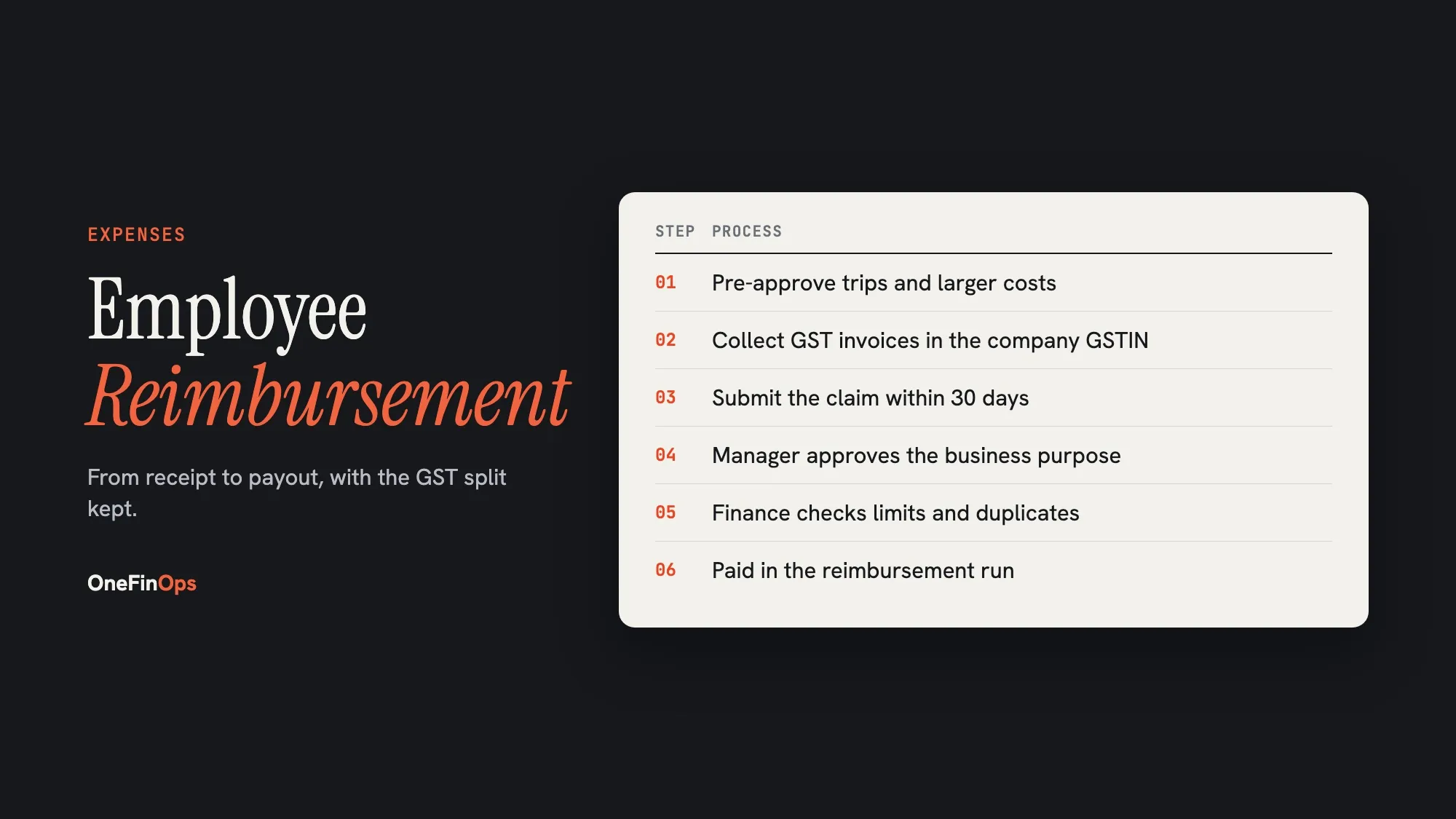
Modern expense audit practices combine automated rule-based checks (duplicate detection, policy limit validation, receipt matching) with risk-based manual sampling. Rather than auditing every claim, finance teams focus resources on high-risk categories (client entertainment, international travel), high-value transactions, and claims from employees with historical patterns of policy violations. This approach maximises audit coverage while keeping the effort manageable.
Key Points
-
Systematic review of expense claims for accuracy, legitimacy, policy compliance, and proper documentation before and after reimbursement
-
Combines automated checks (duplicate detection, policy limit validation, OCR-based receipt verification) with manual risk-based sampling
-
Verifies GST ITC eligibility - confirms tax invoices contain valid GSTINs, correct HSN/SAC codes, and are reflected in GSTR-2B
-
Common red flags include round-number claims, sequential receipt numbers from different dates, consistent max-limit claiming, and merchant category mismatches
-
Best practice is to audit 10-15% of all claims randomly plus 100% of high-risk categories like entertainment and international travel
-
Supports compliance with Section 37(1) of Income Tax Act - expenses must be wholly and exclusively for business purposes to be deductible
-
Findings should feed back into policy updates, employee training, and system rule improvements to reduce future violations