Definition
What is GST?
GST is a comprehensive, multi-stage, destination-based indirect tax introduced on 1 July 2017. It replaced a patchwork of pre-GST levies - Central Excise Duty, Service Tax, VAT, CST and various state taxes - with a single national tax regime for goods and services.
The CGST / SGST / IGST structure
GST operates on a dual model where both the Centre and the States tax the same transaction in parallel:
- CGST - Central GST, collected by the Centre on intra-state supplies.
- SGST - State GST, collected by the state on intra-state supplies.
- IGST - Integrated GST, collected by the Centre on inter-state supplies and imports, then shared with the consuming state.
Every business crossing the registration threshold must register for a GSTIN (Goods and Services Tax Identification Number) and file periodic returns - primarily GSTR-1 (outward supplies) and GSTR-3B (summary return with payment).
Tax slabs
GST rates fall into four slabs - 5%, 12%, 18% and 28% - with essentials exempted and additional compensation cess on select luxury goods and sin goods.
Input Tax Credit (ITC)
The most transformative feature of GST is the seamless Input Tax Credit mechanism. A business can claim credit for GST already paid on its purchases against GST it owes on its sales, eliminating the cascading “tax-on-tax” effect that existed in the pre-GST regime.
E-invoicing
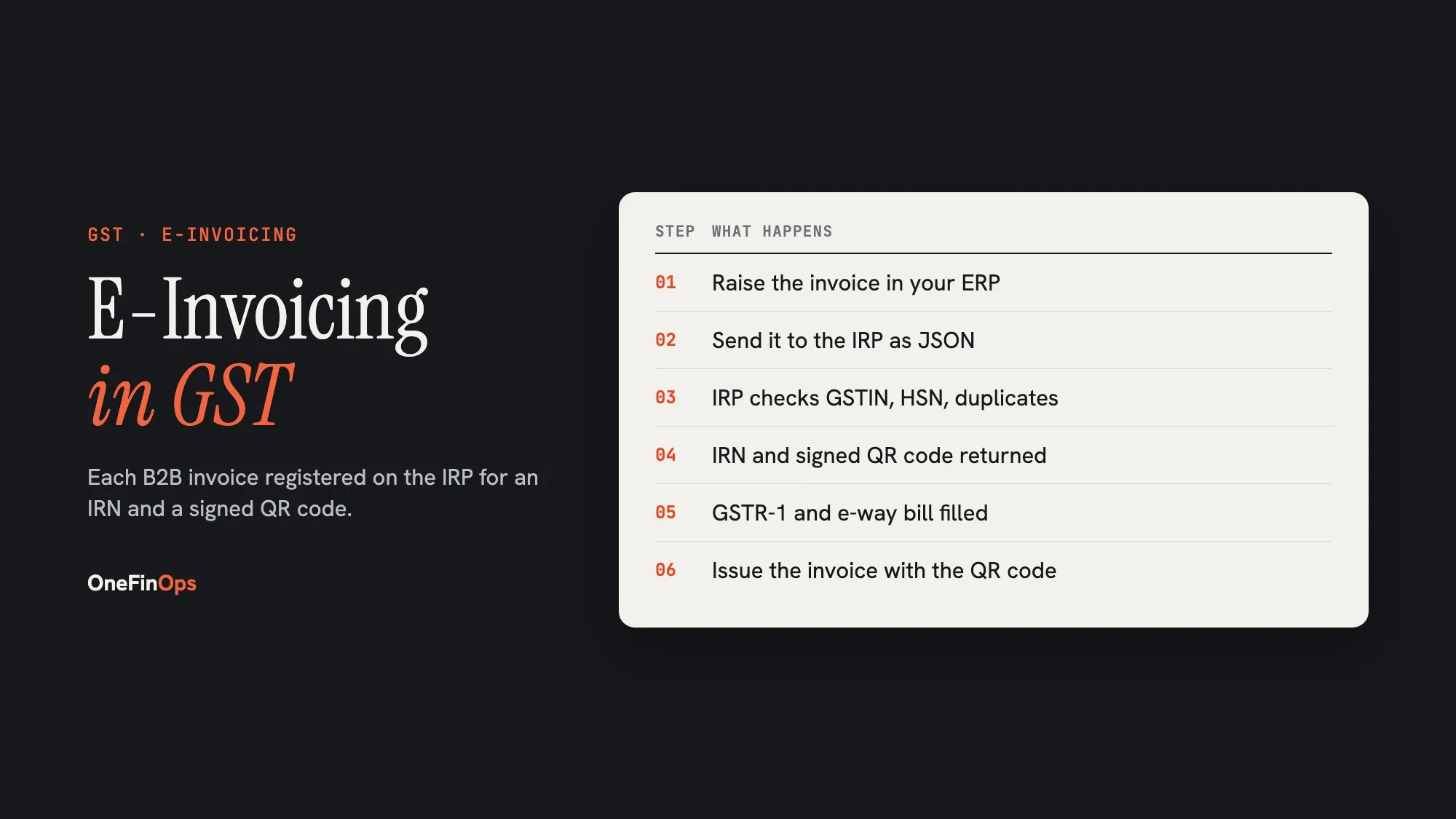
E-invoicing is mandatory for businesses with aggregate annual turnover above ₹5 crore. Invoices are authenticated in real time by the Invoice Registration Portal and assigned a unique Invoice Reference Number (IRN).