Definition
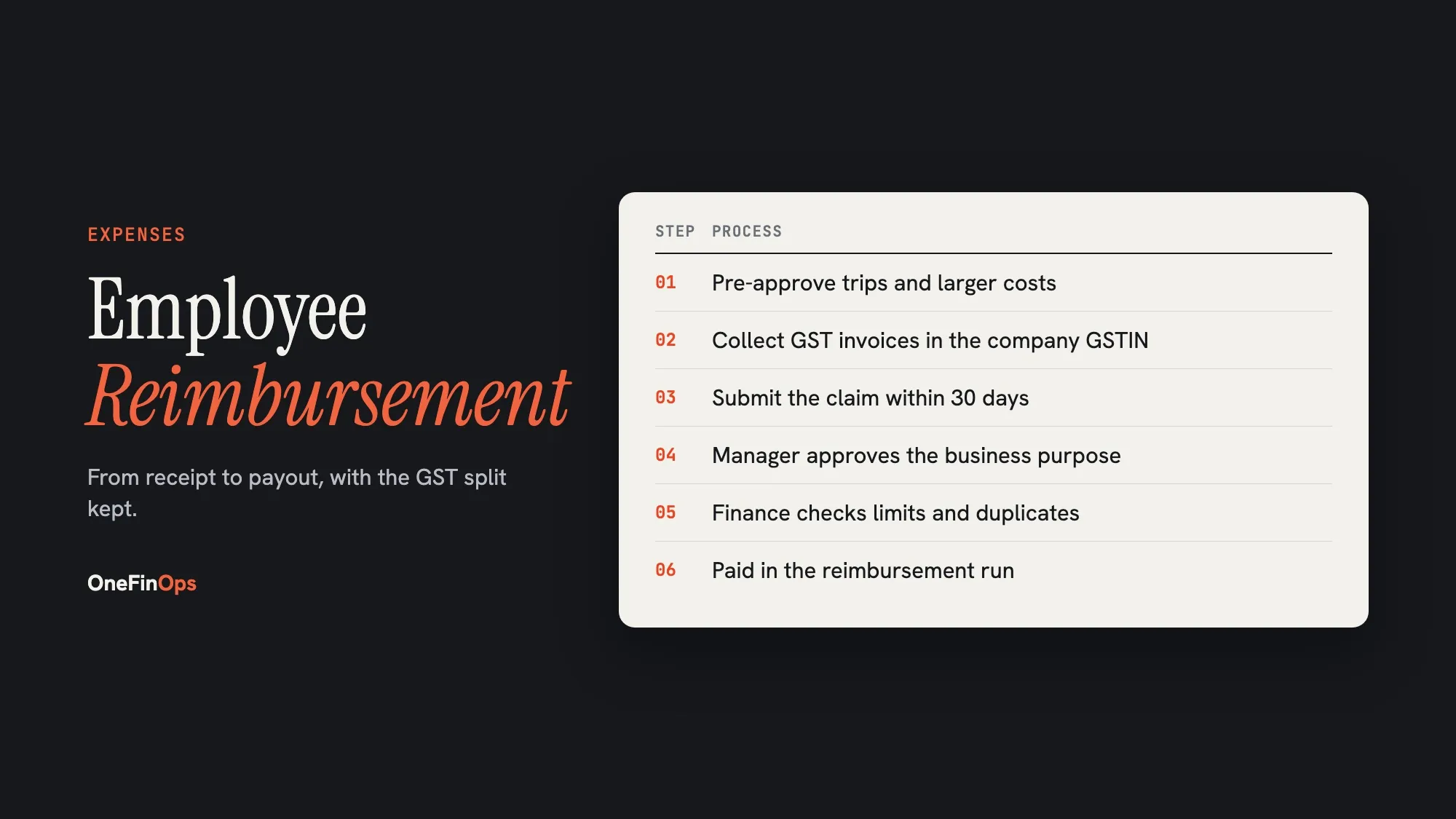
An expense policy is a set of documented guidelines that govern how employees can spend company funds and how they will be reimbursed. It specifies eligible expense categories, spending limits per category and designation, required documentation (receipts, invoices), approval hierarchies, submission deadlines, and consequences for policy violations. The policy serves as the single reference point for employees submitting claims and managers approving them.
For Indian businesses, an expense policy must address regulatory requirements specific to the Indian tax framework. This includes mandating GST-compliant invoices (bearing the company’s GSTIN) to enable input tax credit recovery under Section 16 of the CGST Act, structuring allowances and reimbursements to optimise tax treatment under Section 10 of the Income Tax Act, and ensuring that expense categories align with the ‘wholly and exclusively for business purposes’ requirement of Section 37(1) for deductibility.
A well-designed expense policy balances cost control with employee convenience. Overly restrictive policies lead to workarounds and underreporting, while overly permissive ones result in budget overruns and compliance risk. The best policies are clear enough that any employee can determine in under a minute whether a specific expense is reimbursable, what documentation is needed, and who must approve it.
Key Points
-
Defines spending limits by expense category (travel, meals, accommodation, office supplies) and employee designation or grade level
-
Specifies documentation requirements - GST-compliant tax invoices are mandatory for ITC recovery in India, not just payment receipts
-
Establishes tiered approval workflows based on expense amount and category, with defined SLAs for approver response
-
Sets submission deadlines (typically 7 days from expense date) with escalating consequences for late submissions
-
Lists prohibited expenses explicitly - personal entertainment, alcohol, traffic fines, and expenses without valid receipts
-
Must be reviewed annually to account for GST rate changes, Income Tax Act amendments, and inflation adjustments to spending limits
-
Should address advance settlement rules to avoid perquisite tax implications under Section 17(2) of the Income Tax Act for unsettled advances