Definition
The Income Tax Act, 1961 is the primary legislation governing the levy, computation, assessment, and collection of income tax in India. It replaced the earlier Income Tax Act, 1922 and has undergone numerous amendments through annual Finance Acts since its enactment. The Act is administered by the Central Board of Direct Taxes (CBDT) under the Ministry of Finance, through the Income Tax Department’s network of Principal Chief Commissioners, Chief Commissioners, Principal Commissioners, and Commissioners across India. The Act applies to individuals (residents and non-residents), Hindu Undivided Families (HUFs), companies, partnership firms, LLPs, Association of Persons (AOPs), Body of Individuals (BOIs), and any other person as defined under the Act, making it one of the most broadly applicable pieces of tax legislation in the world.
The Income Tax Act taxes five heads of income: Salaries, Income from House Property, Profits and Gains of Business or Profession, Capital Gains, and Income from Other Sources. Each head has specific rules for computation, allowances, disallowances, and available deductions. The Act provides for extensive deductions and exemptions including Section 80C (investments up to Rs 1.5 lakh), Section 80D (health insurance premiums), Section 10(38) (now abolished for listed equities post-April 2018), HRA exemption, LTA, and standard deduction for salaried employees. The alternative new tax regime introduced under Section 115BAC provides lower slab rates without most deductions, and from FY 2023-24 onwards it is the default regime for individuals and HUFs.
The Act’s procedural framework covers a comprehensive lifecycle from filing of returns to final assessment and dispute resolution. Taxpayers must file their income tax returns (ITRs) by the prescribed due dates, subject to advance tax payment obligations for those with tax liability above Rs 10,000. Returns are processed under Section 143(1) (prima facie assessment), and a percentage are selected for scrutiny under Section 143(2) where detailed examination of income, deductions, and transactions is conducted. Disputes can be appealed to the Commissioner of Income Tax (Appeals) [CIT(A)], the Income Tax Appellate Tribunal (ITAT), High Courts (on questions of law), and ultimately the Supreme Court of India. The Direct Tax Vivad se Vishwas Scheme provides a settlement mechanism for taxpayers with pending tax disputes, having resolved lakhs of cases aggregating to several lakh crore in disputed tax.
Key Points
-
The Income Tax Act, 1961 taxes five heads of income: Salaries, House Property, Business/Profession, Capital Gains, and Other Sources, each with distinct computation rules.
-
Section 115BAC (new tax regime) is now the default regime for individuals and HUFs from FY 2023-24, offering lower slab rates without most deductions.
-
Advance tax must be paid in four instalments (June 15, September 15, December 15, March 15) if total tax liability for the year exceeds Rs 10,000.
-
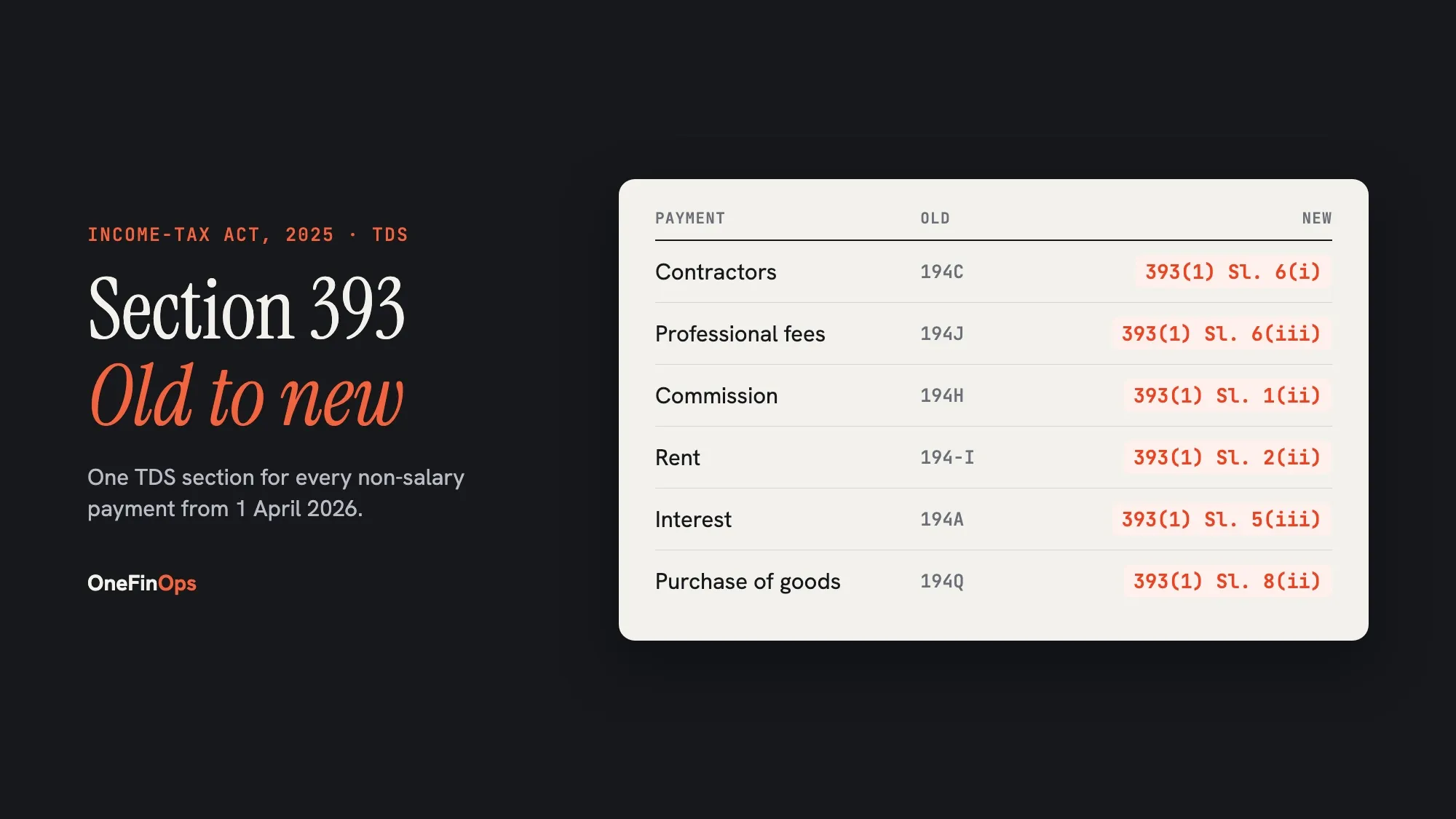
TDS (Tax Deducted at Source) under various sections of the Act ensures tax collection at the source of income, covering salaries, interest, rent, professional fees, and more.
-
The dispute resolution hierarchy runs from CIT(A) to ITAT to High Court to Supreme Court, with the Vivad se Vishwas Scheme providing a faster settlement option.
-
Annual Finance Acts amend the Income Tax Act, changing tax rates, deduction limits, and procedural requirements - making it essential to track budget changes each year.