Definition
GSTR-9 is the annual return prescribed under Section 44 of the CGST Act, 2017, which every registered taxpayer (other than composition taxpayers, Input Service Distributors, casual taxable persons, and non-resident taxable persons) must file for each financial year. It consolidates the information reported in monthly/quarterly returns - GSTR-1 and GSTR-3B - into a comprehensive annual statement covering outward supplies, inward supplies, ITC availed and reversed, taxes paid, and demands and refunds.
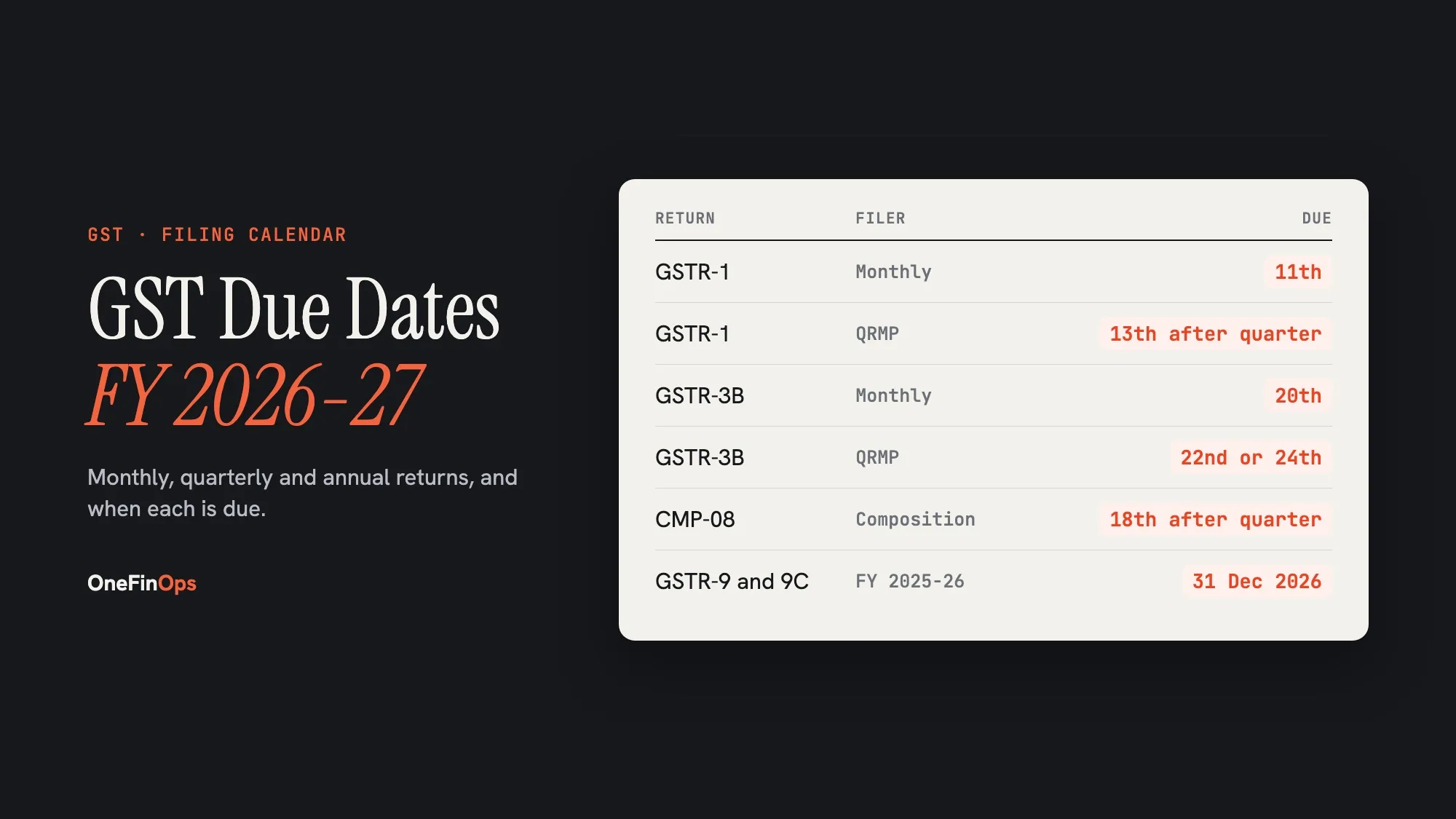
For Indian businesses, GSTR-9 is due by 31st December of the year following the financial year (e.g., GSTR-9 for FY 2024-25 is due by 31st December 2025). The return is structured into six parts with 19 tables covering details of supplies made and received during the year, ITC details, tax paid, transactions from previous years reported in the current year, and other information including demands, refunds, and HSN-wise summary. Businesses with aggregate turnover above Rs. 5 crore must additionally file GSTR-9C, which is a self-certified reconciliation statement comparing GST return data with audited financial statements.
Filing GSTR-9 is significant beyond mere compliance - it serves as the final reconciliation point for the entire financial year. Discrepancies between GSTR-9 and the monthly returns, or between GSTR-9 and the books of accounts, can trigger scrutiny and assessment proceedings. The annual return is also the definitive document for computing the last date for claiming ITC under Section 16(4), making its timely and accurate filing critical for preserving Input Tax Credit entitlements.
Key Points
-
Must be filed by every regular GST taxpayer by 31st December following the end of the financial year
-
Exemption from filing GSTR-9 applies to taxpayers with aggregate turnover up to Rs. 2 crore (as per recent notifications)
-
Structured in 6 parts and 19 tables covering outward supplies, inward supplies, ITC, tax paid, prior year transactions, and HSN summary
-
GSTR-9C (self-certified reconciliation statement) is additionally required for businesses with turnover exceeding Rs. 5 crore
-
Late filing attracts a late fee of Rs. 200 per day (Rs. 100 CGST + Rs. 100 SGST) capped at 0.5% of turnover in the state
-
Once filed, GSTR-9 cannot be revised - any corrections must be handled through subsequent year adjustments or during assessment proceedings
-
The Section 16(4) ITC claim deadline is linked to the GSTR-9 filing date, making timely filing essential for preserving credit entitlements