Filing calendar
Every deadline that applies to your entities, in every country. Owner, status, evidence and audit trail per filing.

GST returns, ACRA filings, CPF submissions and the returns of every other country your group operates in. Drafted from your books, signed off by you, with the evidence attached before anyone asks for it.
Singapore GST is not the grind. The grind is remembering every obligation across every entity, in every country your group operates in, and being able to prove you met them.
Every deadline that applies to your entities, in every country. Owner, status, evidence and audit trail per filing.
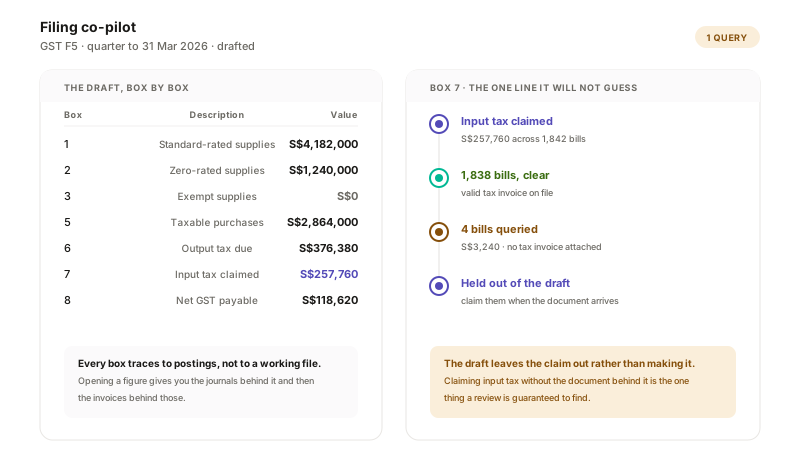
Drafted from your invoices and bills, not keyed by hand. Every box traceable to the transactions behind it before you submit.
Claimable and blocked tagged at the bill, not reconstructed at quarter end. The position you file is one you can defend.
Annual return and XBRL financial statements, prepared from the books rather than reassembled from a spreadsheet.
CPF submissions and the supporting records, filed against the period and the entity they belong to.
A Singapore holding company usually files in several countries. Each entity carries its own calendar; the group view shows all of them.
The filing for the period is drafted automatically from your books. Variances are flagged with drill-down to the source records, and the evidence attaches per line item rather than per filing.
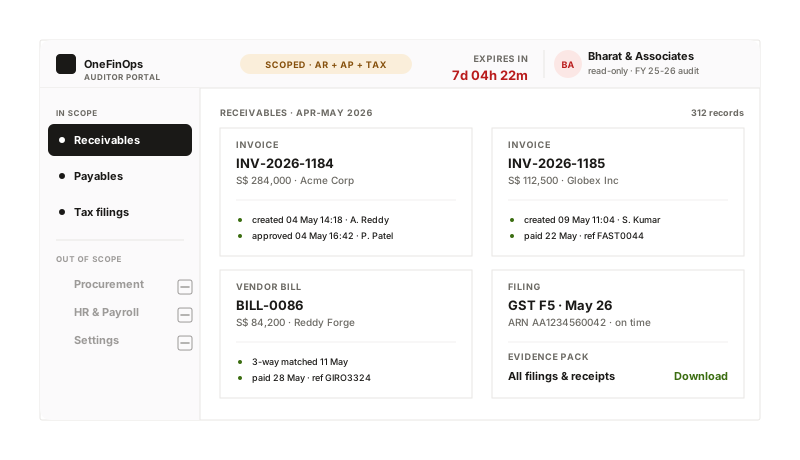
Auditors get a time-bound, scope-limited login. They see only the records, filings and documents within scope. Every view is logged. When the engagement ends, access expires automatically.
Probably not the GST return. Filing one quarterly form is rarely the pain. The pain is proving the number when someone asks, and remembering every other obligation across every entity in the group. That is what this page is about.
GST returns and their supporting workpapers, ACRA annual return and XBRL, CPF submissions, and corporate tax records, all drafted from the books rather than uploaded into a separate tool. Ask us which country packs are live today and we will tell you straight.
Each entity has its own filing calendar, drafts and reconciliation. Aggregated views for the CFO; filings stay per entity. For a group with subsidiaries across the region, every jurisdiction sits on one screen instead of in separate calendars.
A standalone tool starts from a data upload: you collect from your books, normalise, feed it in, every period. OneFinOps starts from the books themselves, so the return is a by-product of work you already did rather than a project of its own.
Every filing has a per-line-item trail back to the source invoice or bill. Sign-offs are captured with timestamp and user, and evidence packs assemble per filing in one click. Auditors get scoped, time-bound access rather than a folder of PDFs.
A 30-minute walkthrough tailored to your statutory mix and entity structure.