


For E-commerce
Built for marketplace volume.
Marketplace settlement reconciliation, returns and refunds, and stock across every channel. Bulk reconciliation over tens of thousands of orders, on one record with your books.
What e-commerce finance needs
Bulk volume, on one record.
A brand selling on three marketplaces across the region is doing finance at a scale generic accounting tools were not built for, in several currencies at once.
Marketplace settlement
Settlement reports ingested per marketplace and matched against your orders en masse, not sampled.
Multi-currency selling
Sell in one currency, settle in another, book in a third. The rate is captured at the transaction, not reconstructed.
GST on sales
The right treatment per order, decided when the order is raised. Exports zero-rated with the evidence attached.
Returns & refunds
Customer returns handled with credit notes, tax adjustment and inventory restock in one movement.
Chargebacks & disputes
Missing settlements and wrong fees flagged for dispute while the marketplace will still look at them.
Multi-channel inventory
Stock by warehouse, by marketplace, by SKU. Reorder triggers per channel.
Marketplace settlement
Settlement reconciliation, finally automated.
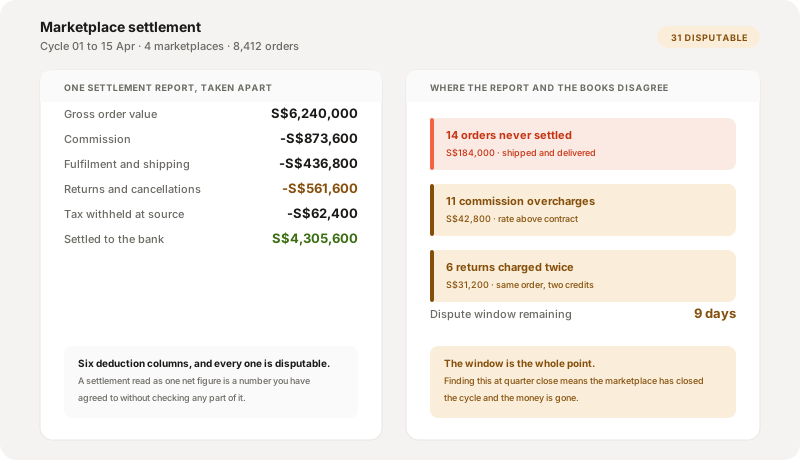
Every marketplace settlement report has its own format, its own deduction columns and its own dispute timeline. OneFinOps ingests them, matches per order, and shows you what is missing while you can still dispute it.
- Auto-ingest of settlement reports from major marketplaces
- Per-order match: gross sales, commission, fees, taxes withheld
- Discrepancies (missing settlements, wrong fees) flagged for dispute
- Multi-currency settlements reconciled at the rate on the day
Selling across the region
One record. Every market you sell into.
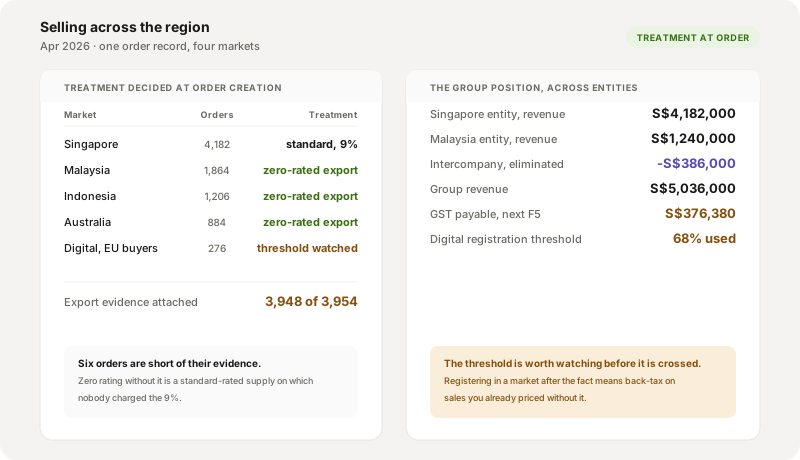
Selling from Singapore into the region means several tax treatments, several currencies and often several entities. Each order carries the right treatment from the outset, and the group position rolls up on the same record.
- Tax treatment per order, decided at order creation
- Zero-rated exports with the supporting evidence attached
- Multi-entity, multi-currency consolidation across markets
- Digital supplies tracked against registration thresholds
E-commerce FAQ
What e-commerce finance teams ask before they switch.
Which marketplaces do you reconcile?
Settlement reports are ingested by API where the marketplace offers one, and by scheduled file upload otherwise. The matching is format-driven rather than marketplace-specific, so a new channel is a mapping exercise rather than a rebuild. Ask us which connectors are live today.
How do returns and refunds work?
A return posts a credit note against the original order, adjusts the tax, and restocks the inventory in one movement. The customer refund and the marketplace deduction both reconcile to the same order, so a return does not go missing between three systems.
We sell in several currencies. How is that handled?
Sell in one currency, settle in another, book in a third. The rate is captured at the transaction rather than reconstructed at month end, and FX gain or loss posts on settlement. Multi-currency is not an add-on here.
We use Singapore as the base for regional selling. Does that work?
That is the common shape. Entities in different markets keep their own currency and tax rules and consolidate onto one set of group books, while the item master and the customer record stay shared. One catalog, several markets.
Do you handle digital services and low-value goods?
Supply volumes are tracked against the books, so the registration question is answered with a number you can see rather than an estimate. The specifics of the thresholds are worth confirming with your tax advisor before you rely on them.
See it on your marketplace mix.
A 30-minute walkthrough on your marketplace mix and state footprint. Or skip the call and start free.