Invoicing in minutes
Customers, invoices, receipts. Branded PDFs, payment links and dunning baked in, with InvoiceNow delivery when your customers are on it.

Books, billing, compliance and audit trail handled before you hire your first finance person. So when they walk in, they walk into a clean ledger, not a spreadsheet graveyard.
At founding stage you don't need NetSuite. You need clean books, clean billing, on-time compliance and an audit trail that holds up at fundraise diligence.
Customers, invoices, receipts. Branded PDFs, payment links and dunning baked in, with InvoiceNow delivery when your customers are on it.
Forward vendor bills via email. OCR, approval and scheduled payment, with the input tax resolved per line.
Below the registration threshold there is nothing to file. Cross it and the return is drafted from the books you already keep.
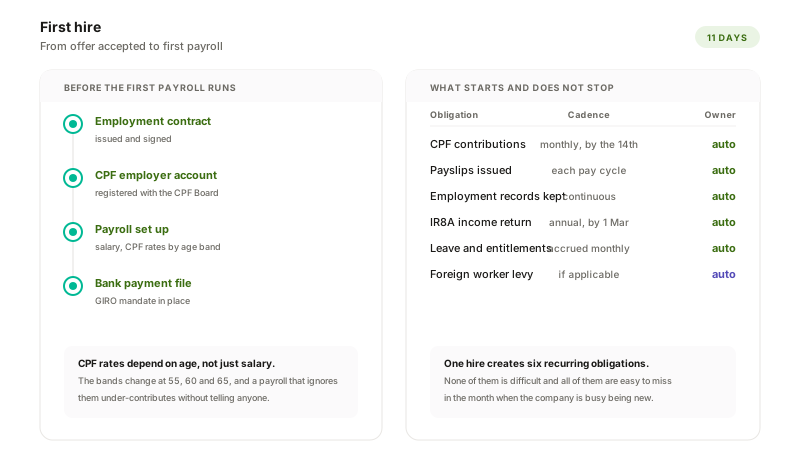
CPF submissions from payroll, the annual return and XBRL from the ledger. Dates tracked so nobody has to remember them.
Bank balance, runway, AR, AP. The screen your investor will ask about every quarter.
Per-line audit trail. Evidence per filing. Auditor-scoped views when DD comes knocking.
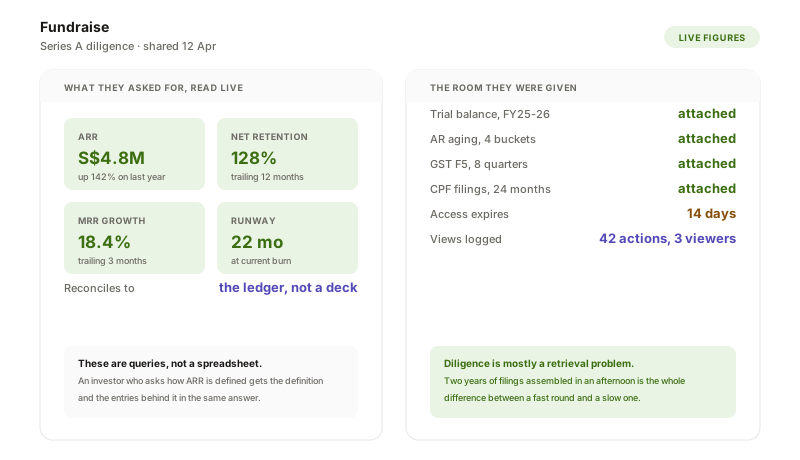
When an investor asks for the trial balance, AR ageing, vendor list, filing history and audit trail, the answer is one shared link. Investor-scoped, time-bound, read-only. Diligence that used to take three weeks happens in three days, and the version of this that costs you a round is the one where it takes six.
Most startups run finance on a mix of books software, a payment gateway, a separate filing tool and a CA firm. When the first finance hire arrives, they spend 3 months untangling. OneFinOps replaces that mess so the handover is hours, not months.
Less than you would expect, which is worth saying rather than manufacturing urgency. Below the GST registration threshold there is no return to file. What you do have from day one is CPF if you have staff, an annual return to ACRA, and a corporate tax filing. None of that is heavy. The reason to start clean anyway is not compliance, it is that your first fundraise will read your books, and rebuilding two years of them under time pressure is a genuinely bad week.
Most CA firms run on a desktop ledger plus spreadsheets, send filings via email and bill by the hour. They are great at the filing itself, less great at giving the founder a live cash position or a clean DD pack. OneFinOps and a CA partner is the right split: software does the bookkeeping and reconciliation, the CA reviews and signs off. Many CA firms run their own clients on OneFinOps.
Xero and QuickBooks are good bookkeeping and most Singapore startups rightly begin there. OneFinOps adds what neither does deeply: three-way matching, vendor onboarding and risk, the AP approval chain, and multi-entity consolidation once you have a subsidiary in the region. Plenty of teams run both, with the ledger staying where it is. We migrate with the history when you want to move, and we say so when you do not need to yet.
Yes, for a while. Bills come in, you approve, the platform does the rest, and the filings are drafted for you to sign off. What you should not do without an accountant is the first year-end, because the questions there are judgment rather than process. Most founders run the month on their own and bring someone in for the close, then hire properly once the second entity appears.
A 30-minute walkthrough on your books, your filings and the DD pack your next round will ask for.