Filing calendar
Every deadline that applies to your entities, in every state. Owner, status, evidence and audit trail per filing.

State sales tax returns, 1099 filings, Secretary of State annual reports and payroll returns. Drafted from your books, signed off by you, with the evidence attached before anyone asks for it.
No single filing here is hard. The grind is that there are fifty states setting their own rules, an obligation can start without anyone telling you, and you have to be able to prove you met all of it.
Every deadline that applies to your entities, in every state. Owner, status, evidence and audit trail per filing.
Drafted per state from your invoices, not keyed by hand. Every figure traceable to the transactions behind it before you submit.
Measured against every state as you sell, so an obligation shows up in your own books rather than in a notice.
Secretary of State annual reports per state and per entity, prepared from the records rather than reassembled from a spreadsheet.
W-9s on file, taxpayer numbers matched and reportable spend accumulating per payee, all year rather than in January.
Each entity carries its own registrations and its own calendar, and the group view shows all of them on one screen.
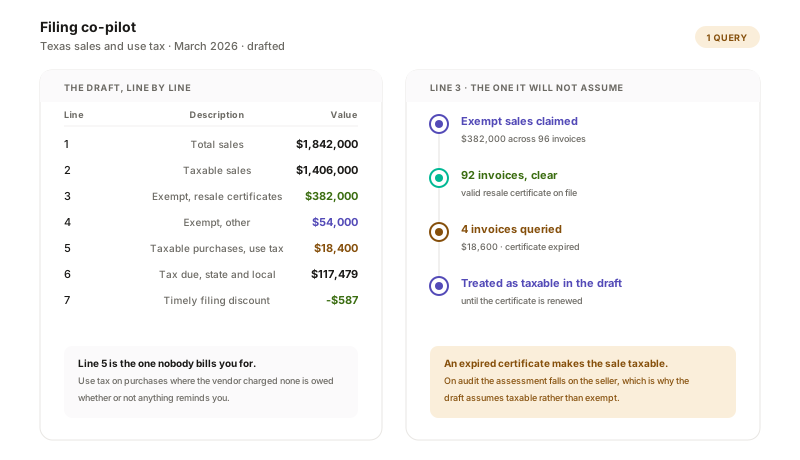
The filing for the period is drafted automatically from your books. Variances are flagged with drill-down to the source records, and the evidence attaches per line item rather than per filing.
Auditors get a time-bound, scope-limited login. They see only the records, filings and documents within scope. Every view is logged. When the engagement ends, access expires automatically.
Probably not the returns themselves. The pain is knowing which states you owe one in before a notice arrives, producing the certificate that made a sale exempt three years ago, and having the W-9 for a vendor you paid in March. That is what this page is about.
State sales tax returns and their workpapers, 1099 filings, Secretary of State annual reports and payroll returns, all drafted from the books rather than uploaded into a separate tool. Rate determination stays with your tax engine or your advisor; we hold the position and the evidence.
Each entity has its own registrations, filing calendar, drafts and reconciliation. Aggregated views for the CFO; filings stay per entity, because the obligation follows the legal entity that made the sale.
A standalone tool starts from a data upload: you collect from your books, normalise, feed it in, every period. OneFinOps starts from the books themselves, so the return is a by-product of work you already did rather than a project of its own.
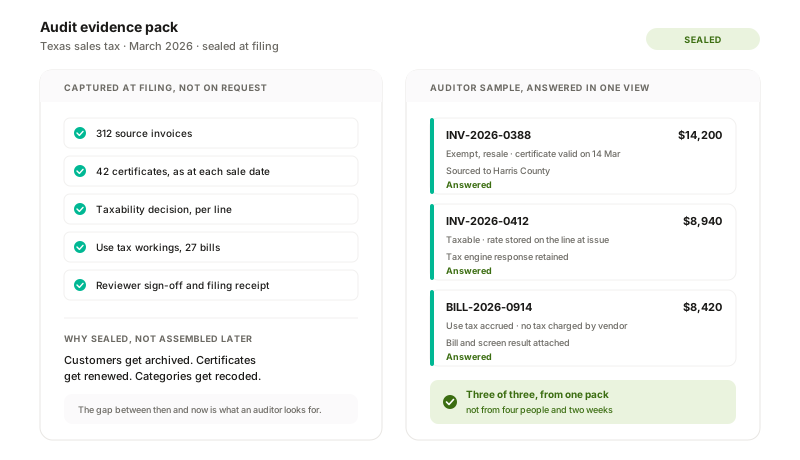
Every filing has a per-line-item trail back to the source invoice or bill. Sign-offs are captured with timestamp and user, and evidence packs assemble per filing in one click. Auditors get scoped, time-bound access rather than a folder of PDFs.
A 30-minute walkthrough tailored to your statutory mix and entity structure.