
Vendor Management
Vendor management software. One record, ready to pay.
Bills, POs, contracts and onboarding documents on the same vendor record AP posts against. W-9 collected before the first payment, taxpayer number matched against IRS records, bank details re-checked whenever they change.
Trusted by finance teams
Vendor Master
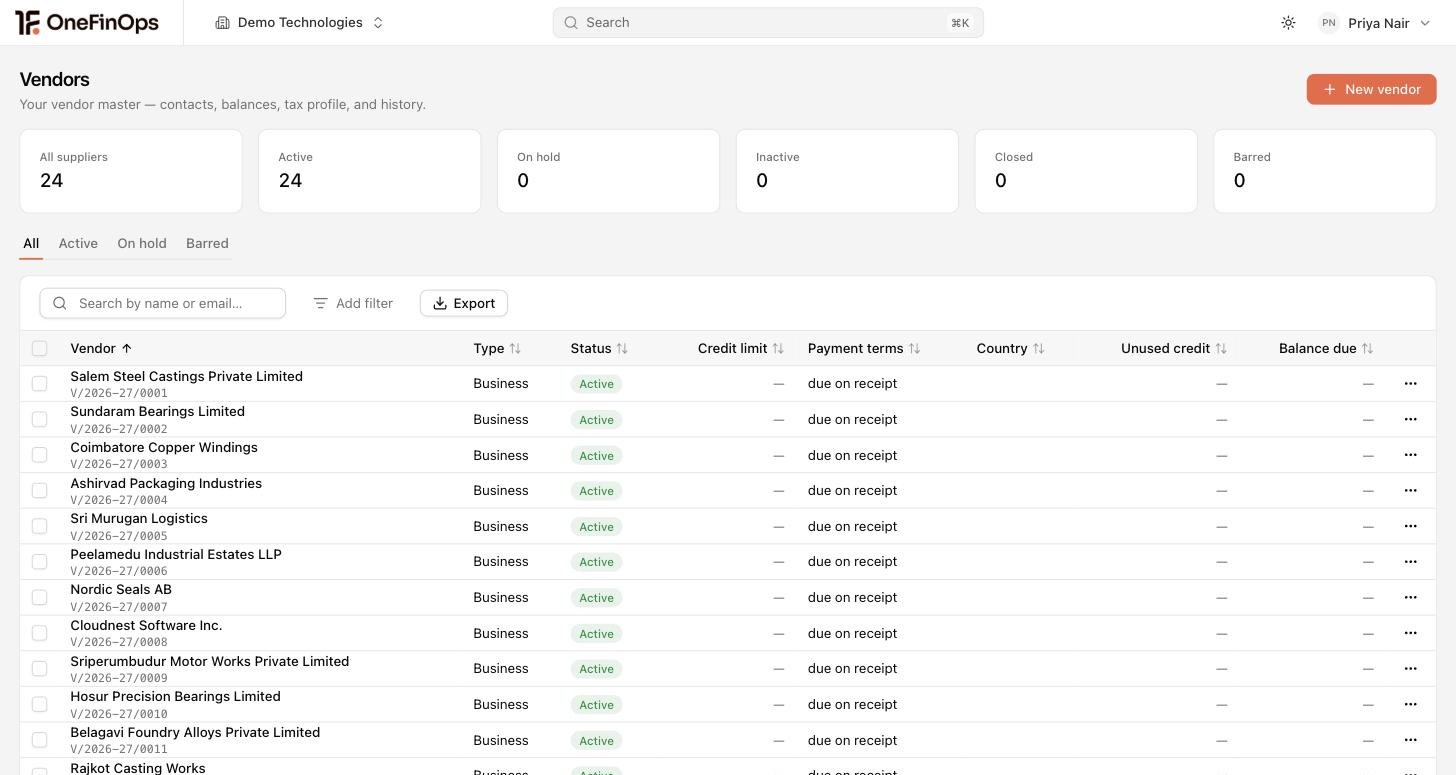
One vendor record, not two systems kept in sync.
Bills, POs, payments and contracts on the same vendor record AP and procurement post against. Onboarding documents at the top, transaction history below, performance over time, risk score in the corner. Most teams run an AP tool and a spreadsheet; this is the alternative to reconciling them.
Vendor Verification
The W-9 before the first payment, not in January.
The form is collected through the portal at onboarding, the taxpayer name and number are matched against IRS records, and bank details are re-checked whenever they change. A vendor who has not been paid yet responds the same day. One who was paid in full eleven months ago has no reason to answer.
Vendor Risk Scoring
Vendor risk, scored nightly.
A composite score across payment behaviour (do invoices match POs?), concentration (what share of total AP sits with one vendor?) and dispute history. Weights configurable per organisation, refreshed nightly. Concentration risk shows up before it becomes a dependency.
Vendor Onboarding Portal
Vendors onboard themselves.
A self-service portal for the vendor to submit their details, complete their W-9 and keep documents current. Insurance certificates and licences carry their expiry, so renewals land on a calendar rather than being discovered at payment time.
Vendor Performance Tracking
Performance over time. Alternates when it slips.
On-time delivery against the PO promised date, quality acceptance against received quantity, and average payment cycle, which is your timing on their bills. When a score declines, alternates from your catalog surface so procurement can act early.
Vendor Self-Service Portal
No more "where’s my payment?" emails.
The vendor sees their open POs, receipts, bills submitted, payment status and outstanding balance. They submit invoices, update their details and raise disputes themselves. AP chase time goes down and the relationship gets easier.
Buyer FAQ
What teams ask before they switch.
We already have an AP tool. Why would we need this?
Most AP tools hold the vendor as payment details: a name, an address and where to send money. They do not hold the W-9 and its expiry, the insurance certificate, the contract and its renewal date, the performance history or the concentration exposure. Teams that need both end up buying a second system and keeping a vendor master in sync between them, which is two contracts, two implementations and a reconciliation that never quite holds.
What stops a fraudulent bank-detail change?
A change to a vendor’s bank details is treated as an event, not an edit. It is flagged, routed for approval and held against the payment run until someone signs it off, and the trail keeps who changed what and who approved it. This is the single most common payment fraud in the US mid-market and it almost always arrives as a convincing email from a real vendor contact.
Can vendors fill in their own details?
Yes. The portal lets vendors submit their details, complete their W-9, upload documents and respond to requests, with approval routing on your side capturing the review trail. Onboarding moves from days to hours with no email chase.
Does it check that the W-9 is actually right?
It checks the form is complete, and separately matches the taxpayer name and number against IRS records, which is the check that matters. A form in your file tells you what the vendor typed; matching tells you whether the name and number go together. The difference shows up months later as a notice, with a withholding obligation attached and a vendor already paid in full.
How is the risk score computed?
A weighted score across payment behaviour, concentration and dispute history, adjustable per organisation and updated nightly. It needs about three months of activity to mean anything, and we would rather say that than show you a confident number on day one.
We run several entities. Is the vendor master shared?
Both, by design. The record is shared at group level so one supplier is one vendor, with per-entity overrides for contracts, payment terms and approval matrices. Reportable spend still totals per filing entity, because each entity files its own returns under its own employer identification number.
Do you pay the vendors?
Not in the US. Approved bills export as an ACH file for your bank or push to your ERP, and your bank moves the money. We take no cut and hold no float, which means you keep your bank’s payment rates rather than paying a per-transaction fee to a platform.
Upload your vendor master. See the risk surface by morning.
Bring your top 100 vendors as a CSV. Missing W-9s, unmatched taxpayer numbers, concentration exposure and duplicate records all surface before your next payment run.
Comparing alternatives?