


Information Reporting | 1099-MISC
The reportable payments that do not look like vendor spend.
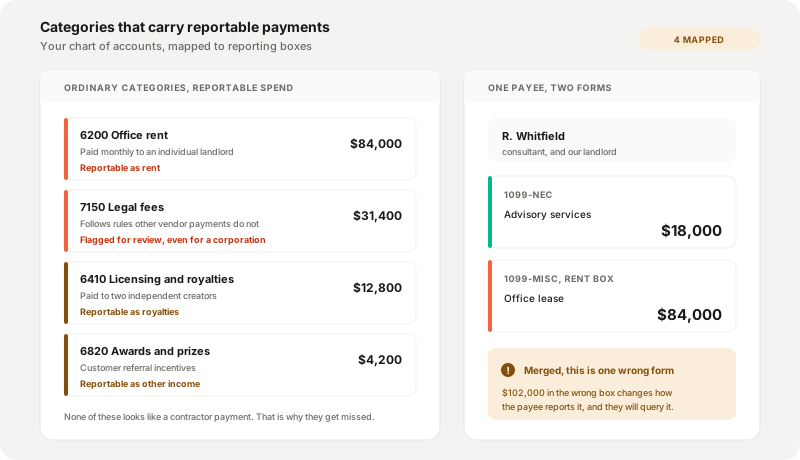
Contractor payments are the ones everybody remembers. Rent paid to a landlord, royalties, prizes, and payments to an attorney are the ones that sit in the ledger for a year without anyone thinking of them as reportable. They are flagged by the category they are coded to, which is the only moment anyone is thinking about them.
What the system does
Capability, input, output.
| Capability | Input | Output |
|---|---|---|
| Category flags | Expense categories you already use | Rent, royalties, prizes and legal mapped to their reporting boxes |
| Attorney treatment | Payments to a law firm | Flagged separately, since these follow rules other vendor payments do not |
| Rent identification | Recurring property payments | Caught as reportable, including where the landlord is an individual |
| Box mapping | A reportable payment | The specific box it belongs in, rather than one undifferentiated total |
| NEC and MISC split | A payee receiving both kinds | Two forms where two are needed, not one merged figure |
| Form preparation | The year's payments by box | A 1099-MISC per payee, traceable to the payments behind each box |
-
Category flags
- Input
- Expense categories you already use
- Output
- Rent, royalties, prizes and legal mapped to their reporting boxes
-
Attorney treatment
- Input
- Payments to a law firm
- Output
- Flagged separately, since these follow rules other vendor payments do not
-
Rent identification
- Input
- Recurring property payments
- Output
- Caught as reportable, including where the landlord is an individual
-
Box mapping
- Input
- A reportable payment
- Output
- The specific box it belongs in, rather than one undifferentiated total
-
NEC and MISC split
- Input
- A payee receiving both kinds
- Output
- Two forms where two are needed, not one merged figure
-
Form preparation
- Input
- The year's payments by box
- Output
- A 1099-MISC per payee, traceable to the payments behind each box
1099-MISC FAQ
What buyers ask.
We pay rent to our landlord. Is that really reportable?
Often yes, and it is one of the most commonly missed items in the whole area, because rent does not feel like a vendor payment. It goes out reliably every month, nobody re-examines it, and the landlord is frequently an individual or a partnership rather than a corporation, which is exactly the population that needs a form.
Why are payments to attorneys flagged separately?
Because legal payments follow rules that other vendor payments do not, including in cases where the recipient is a corporation and would otherwise be outside the requirement. It is a genuine exception rather than a nuance, so those payments are surfaced for a decision rather than run through the general logic.
What is the difference between NEC and MISC in practice?
Payments for services performed by someone who is not your employee generally go on the NEC. The MISC carries a set of other payment characters, including rent, royalties and prizes. A payee can receive both, and when they do they should receive two forms rather than one combined figure.
Do the boxes matter, or just the total?
They matter. The box determines how the payee reports the income, and putting the right total in the wrong box produces a query from the payee and a mismatch on their side. Payments carry their box from the category they were coded to rather than being totalled and assigned later.
Our categories are non-standard. Does that break it?
No. The mapping runs from your chart of accounts as it is, configured once, rather than requiring you to adopt a category scheme designed around tax forms. Most teams have accumulated categories that made sense operationally and never mapped them to reporting at all, which is where the gaps live.
See which of your categories carry reportable payments.
Connect your books, free. Your chart of accounts is mapped to the reporting boxes, and the payments already sitting in them come back as a list.