


Information Reporting | United States
1099 filing. The work is in onboarding, not January.
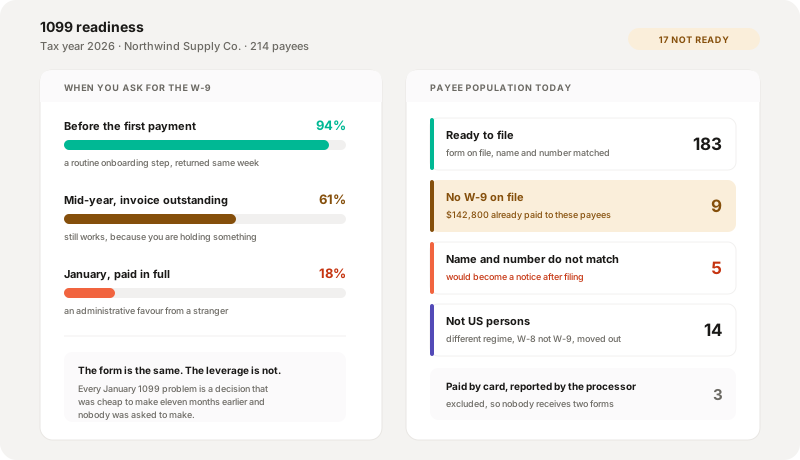
W-9s collected before the first payment goes out, taxpayer numbers checked while you still have leverage, and reportable spend accumulating per payee all year. The filing is what falls out of that, rather than a scramble against a deadline.
Trusted by finance teams










Payee Tracking
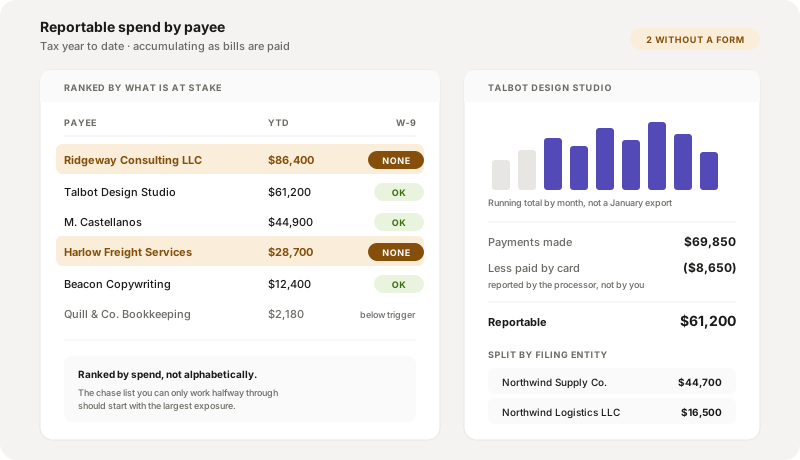
The totals build all year, not in January.
Reportable spend accumulates per payee as bills are paid, against the taxpayer name and number you collected at onboarding. In January you are checking a number, not building one out of twelve months of payment history.
1099-NEC
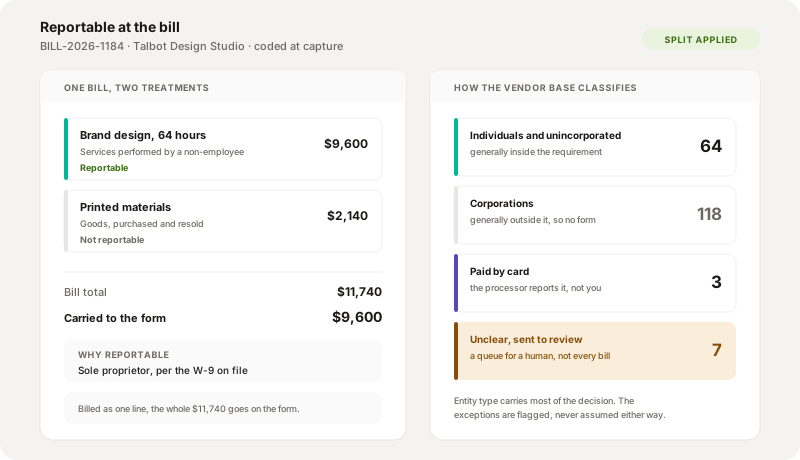
Contractor payments, coded when they happen.
Whether a payment is reportable is a decision about the payee and the nature of the work, and it is easiest to make at the bill. Coded there, the form is a report of what you already know rather than a reconstruction.
1099-MISC
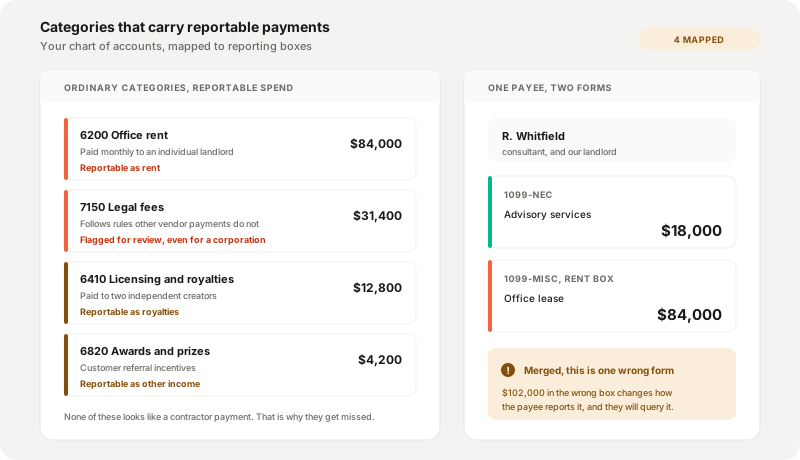
Rent, royalties, and the legal payments people forget.
The form that catches teams out, because its categories do not look like vendor spend. Payments to an attorney are reportable on a basis that surprises most finance teams, and rent to a landlord is reportable at all.
Backup Withholding
The one case where you do hold cash back.
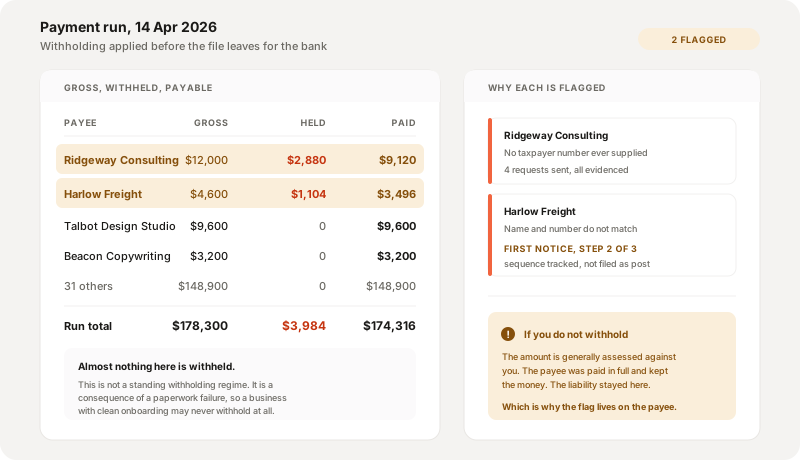
When a payee has not given you a valid taxpayer number, or the IRS tells you the one you have does not match, withholding starts and the liability for not doing it is yours. Flagged on the payee, applied at the payment run.
E-Filing
Filed electronically, with the acknowledgement kept.
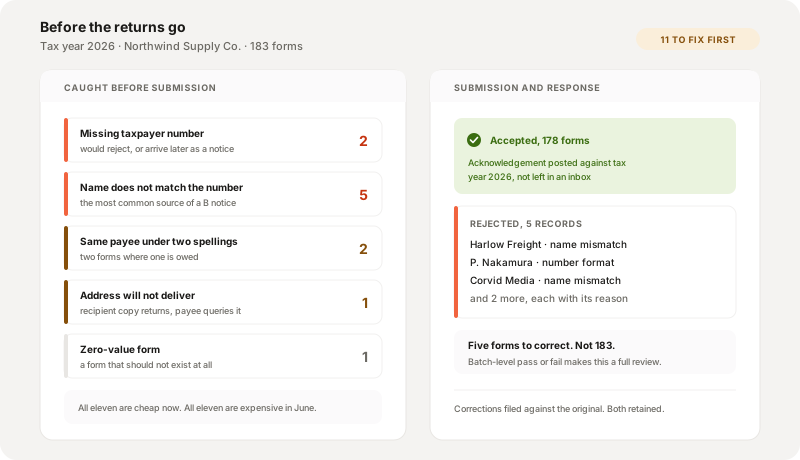
The electronic filing threshold is low enough that most businesses are inside it. Returns are prepared from the payee records, submitted, and the acknowledgement posts back against the year rather than living in someone's inbox.
State Filing
The federal filing is not the last one.
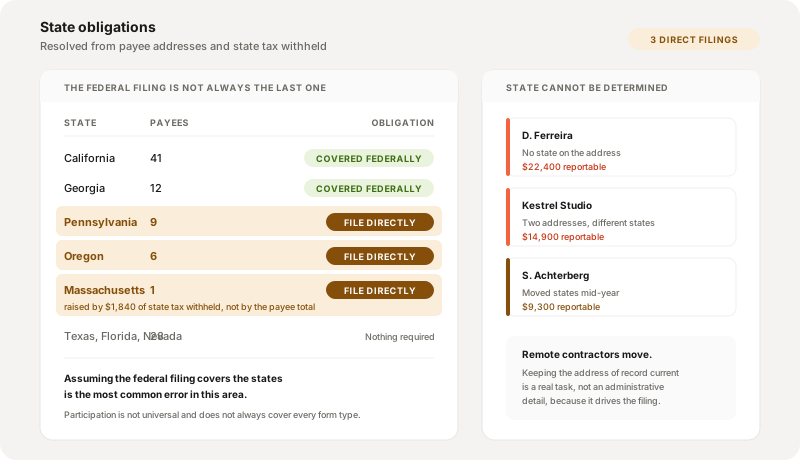
Some states take a copy through the combined federal and state program, some want their own filing, and some want nothing. The obligation is tracked per state and per payee address rather than assumed to be covered by the federal return.
Foreign Payees
A foreign contractor is a different form entirely.
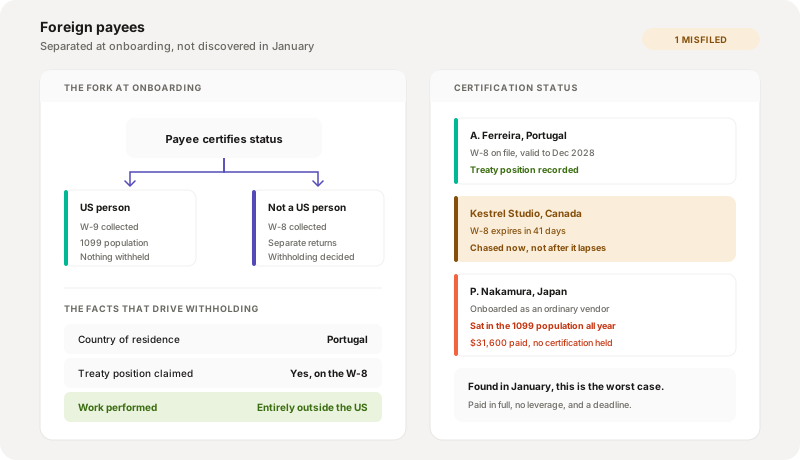
A payee who is not a US person does not get a 1099. They get a different regime, a different form, a W-8 instead of a W-9, and a withholding question that turns on the treaty position. Separated at onboarding, not discovered in January.
Buyer FAQ
What teams ask before they switch.
Our payroll provider does our 1099s. Why would we change?
Most likely you should not, and we would rather say that than sell you a second filing tool. What payroll providers do not have is your accounts payable. They file from a list you give them, and building that list correctly is the actual work. This is about the eleven months before the filing, not the filing itself.
What actually goes wrong with 1099s?
Almost never the form. It is a vendor paid for two years with no W-9 on file, a payee whose name and taxpayer number do not match what the IRS holds, an attorney payment nobody coded as reportable, or a contractor who turned out to be foreign. All four are onboarding problems that present as a January problem.
Do you file the returns for us?
Returns are prepared from your payee records and submitted electronically, with the acknowledgement recorded against the year. Where you already file through an accountant or a dedicated filing service, that stays, and the confirmation still comes back onto the record so the year is complete either way.
How does it know which payments are reportable?
From the payee classification collected on the W-9 and the expense coding on the bill. Entity type carries most of the decision, and the categories that behave unusually are flagged rather than assumed. The judgement calls come to a review queue instead of every payment needing a human.
We pay contractors overseas. Does that work?
They are separated at onboarding, because a payee who is not a US person is a different regime with a different form and a withholding question of its own. The failure mode we see is a foreign contractor sitting in the 1099 population all year and being found in January, which is the worst time to ask someone for a tax form.
Can we migrate from QuickBooks?
Yes. Onboarding covers migration with historical data, masters, opening balances and in-flight invoices and bills. A dedicated implementation lead runs the cutover.
See which of your vendors have no W-9 on file.
Connect your books, free. Payees are matched against the forms you hold, and the gaps come back as a list while there is still time to close them.
Comparing alternatives?