


Entity Compliance | United States
Incorporated in one state. Answerable to several.
Annual reports, registered agents, foreign qualifications and corporate records, tracked per state and per entity. Each obligation generated from the registrations you actually hold, with the officer and address data every filing depends on kept in one place.
Trusted by finance teams










Annual Reports
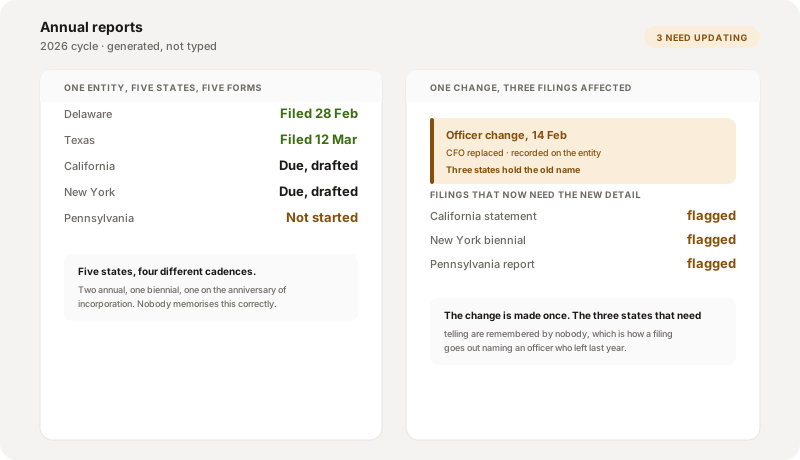
One entity, five states, five different reports.
Every state you are registered in wants its own report on its own cadence, each asking for officers, addresses and an agent that have to be current. Obligations are generated from your registrations rather than typed into a spreadsheet, and the details each filing depends on live on the entity.
Registered Agent
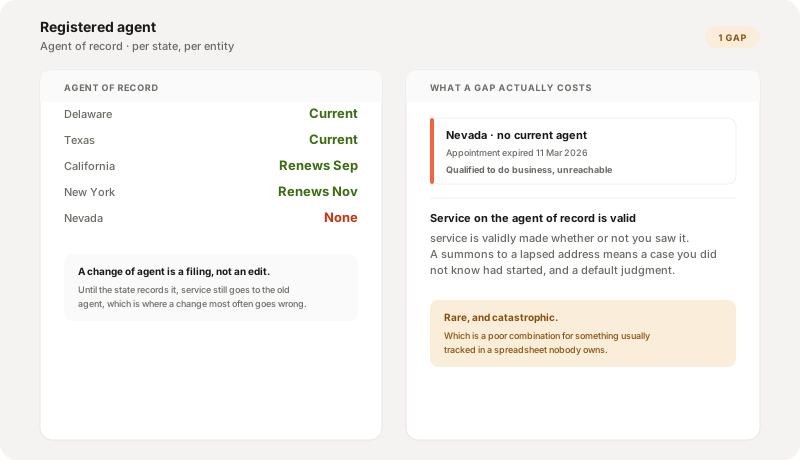
The address lawsuits are sent to.
Every state you are qualified in requires a designated agent to receive service of process. Administrative trivia until an agent lapses, a summons goes to an address nobody monitors, and a default judgment arrives. The appointment, the address and the renewal are held per state.
Foreign Qualification
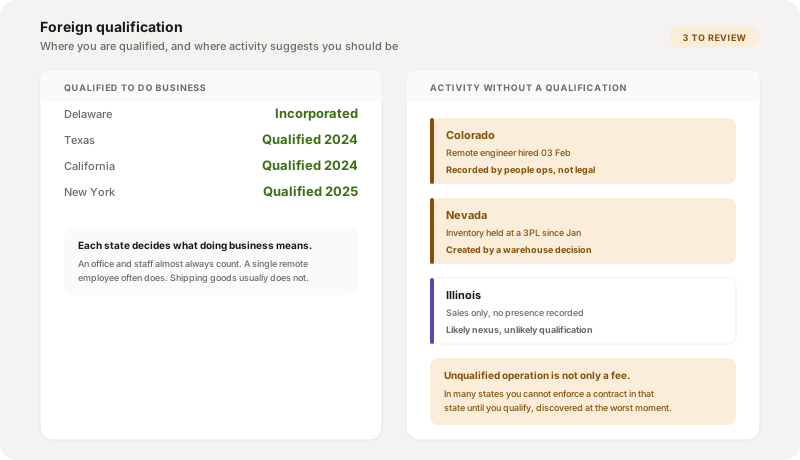
Incorporated in one state. Operating in seven.
Doing business in a state you are not incorporated in generally requires qualifying there, and each state decides for itself what that means. Qualifications are held per entity per state, alongside the activity that suggests one may be needed.
Corporate Records
The minute book, kept rather than assembled.
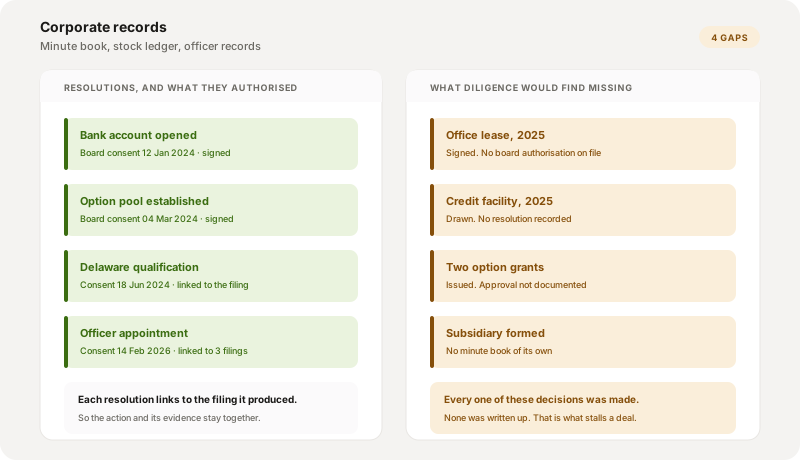
Board and member resolutions, the stock ledger, officer records and the filings each one authorised. Nobody misses these until a lender or an acquirer asks, and then it is two weeks of reconstruction with the deal waiting.
Beneficial Ownership
Who owns and controls the entity, recorded and current.
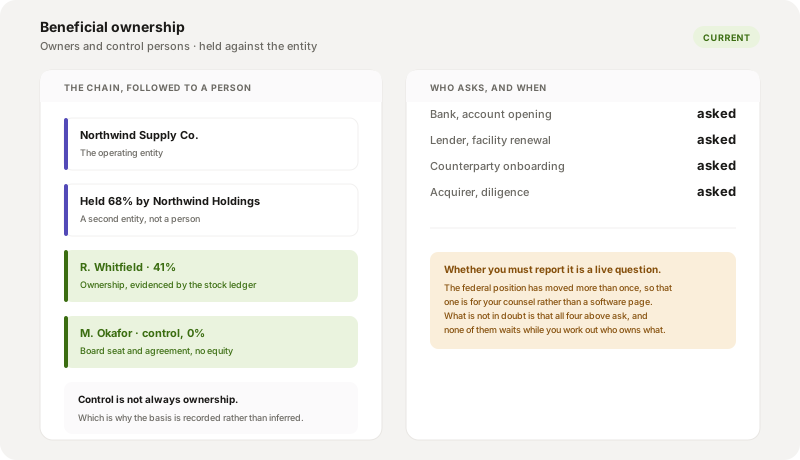
Owners and control persons held against the entity with the evidence behind each determination and a history of every change. Banks ask at account opening, lenders at renewal, counterparties at onboarding. A maintained record answers all of them.
Compliance Calendar
Annual obligations are the ones that get missed.
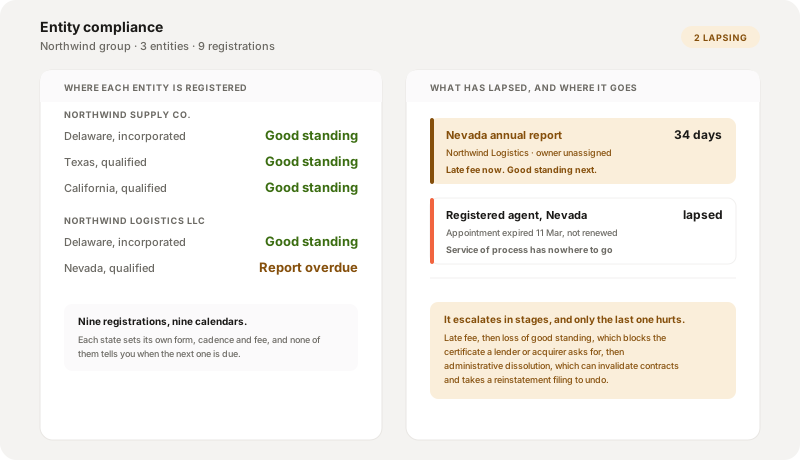
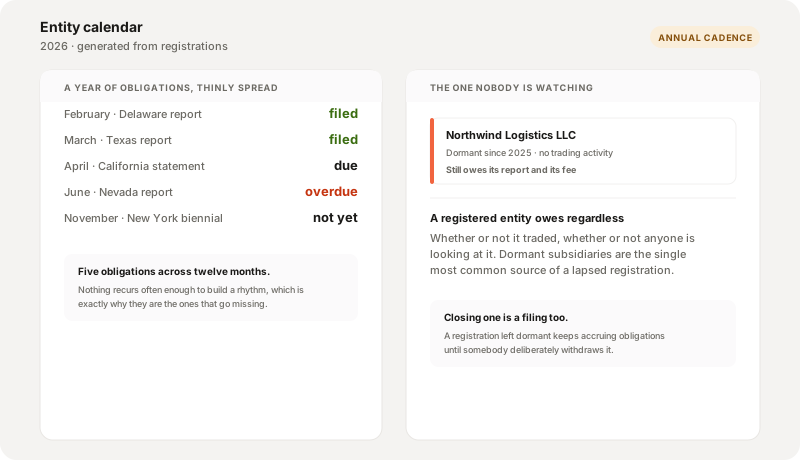
Something due monthly gets a rhythm. Something due once a year in a state you rarely think about gets forgotten, and the escalation runs from late fee to loss of good standing to administrative dissolution. Obligations come from your registrations with an owner against each.
Buyer FAQ
What teams ask before they switch.
Our registered agent already handles this. What are we buying?
Agents file well when they are given current information, and the reason they often cannot is that nobody sends it in time. What an agent does not hold is your officer changes, your qualification decisions, your minute book or the connection between them. This is the record their service runs on, not a replacement for it.
What actually goes wrong without this?
Three things, in rising order of cost. A missed annual report becomes a late fee. Repeated, it becomes loss of good standing, which blocks the certificate a lender or acquirer wants. Left long enough it becomes administrative dissolution, which can invalidate contracts and takes a reinstatement filing to undo. Every stage is avoidable and none is technically difficult.
Do you make the filings for us?
We generate the obligation, hold the data each filing needs, and track it to confirmation. Submission routes vary by state and most teams already use a registered agent or counsel for that step, so we do not require you to change it. The confirmation records back against the entity either way.
How does this relate to sales tax nexus?
Different obligation, different trigger, and the two are frequently confused. Nexus is about collecting tax on sales into a state. Qualification is about the right to conduct business there at all. You can have either without the other, and the consequences differ: unqualified operation can mean you cannot enforce a contract in that state until you fix it.
We have dormant subsidiaries. Do they cost anything?
Usually yes, which surprises people. A registered entity generally owes its annual report and any franchise fee whether or not it traded. Dormant subsidiaries are the most common source of a lapsed registration, precisely because nobody is looking at them.
Can our counsel work in it directly?
Yes, scoped to the entities they act on and time-boxed. That is a better arrangement than a shared drive for both sides, since a diligence request tends to be answered by handing over far more than was asked for.
See what every entity owes, in every state.
Connect your entities, free. Obligations come from the registrations you hold, each with an owner and the data its filing depends on.
Comparing alternatives?