


Entity Compliance | Corporate Records
The minute book, kept rather than assembled.
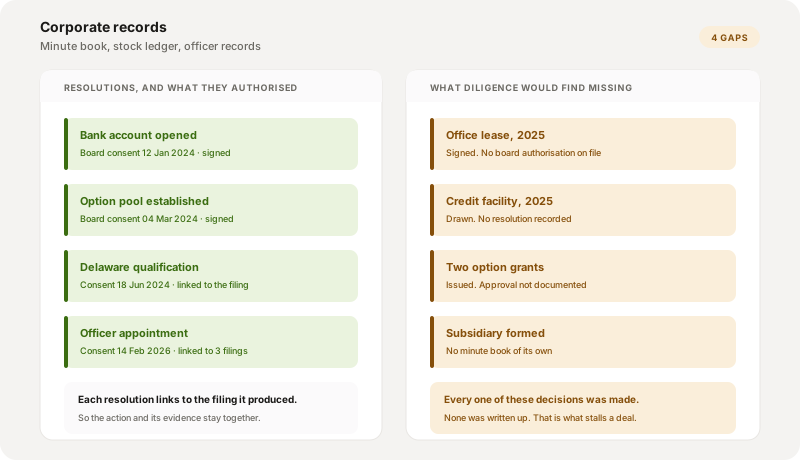
Board and member resolutions, consents, the stock ledger and cap table, officer and director records, and the filings each of them authorised. Nobody misses these until a lender, an auditor or an acquirer asks, and then the gap is two weeks of reconstruction under time pressure with the deal waiting.
What the system does
Capability, input, output.
| Capability | Input | Output |
|---|---|---|
| Resolutions and consents | Board and member actions | Held in date order with what each one authorised |
| Filing cross-link | A resolution and the filing it produced | Two-way navigation, so an action and its evidence stay together |
| Stock ledger | Issuances, transfers and cancellations | A current cap table with the history behind each position |
| Officer and director records | Appointments and resignations | Current holders and the effective dates, which the annual reports need |
| Signature capture | A resolution requiring execution | Signed electronically and sealed, with the trail retained |
| Diligence pack | A request from counsel or an acquirer | Scoped, time-boxed access rather than a shared drive |
| Gap detection | The record set per entity | What is missing, before somebody external asks for it |
-
Resolutions and consents
- Input
- Board and member actions
- Output
- Held in date order with what each one authorised
-
Filing cross-link
- Input
- A resolution and the filing it produced
- Output
- Two-way navigation, so an action and its evidence stay together
-
Stock ledger
- Input
- Issuances, transfers and cancellations
- Output
- A current cap table with the history behind each position
-
Officer and director records
- Input
- Appointments and resignations
- Output
- Current holders and the effective dates, which the annual reports need
-
Signature capture
- Input
- A resolution requiring execution
- Output
- Signed electronically and sealed, with the trail retained
-
Diligence pack
- Input
- A request from counsel or an acquirer
- Output
- Scoped, time-boxed access rather than a shared drive
-
Gap detection
- Input
- The record set per entity
- Output
- What is missing, before somebody external asks for it
Corporate Records FAQ
What buyers ask.
Does anyone actually check this?
Lenders and acquirers do, closely, and it is where diligence most often stalls. The problem is rarely that decisions were not made; it is that they were made in a meeting, actioned, and never written up, so there is no record that the company authorised what it did.
What is the most common gap?
Resolutions for things that felt routine at the time: opening a bank account, signing a lease, issuing options, appointing an officer. Each is a board action, each usually happened, and often none was documented. Reconstructing them years later with the original signatories gone is genuinely hard.
Can we keep the stock ledger here if we use a cap table tool?
You can, and many teams run both, but pick one as the record. The failure we see is two ledgers that agreed at setup and have drifted since, which surfaces during diligence when the difference has to be explained rather than fixed.
How is access controlled for diligence?
Scoped to the entities and periods the request covers, time-boxed, and logged. Handing over a shared drive is the usual approach and it discloses far more than intended, which is a problem you only notice afterwards.
We have entities in several states. Does each need its own?
Yes. Records follow the legal entity, and a subsidiary with no minute book of its own is a real finding rather than a technicality. Each entity carries its own set, with the group view on top.
More in Entity Compliance
Related features
See what your minute book is missing.
Connect your entities, free. Resolutions, the stock ledger and officer records assemble, and the gaps come back as a list.