Filing calendar
Every deadline that applies to your entities and states. Owner, status, evidence and audit trail per filing.

GSTR-2B reconciliation, GSTR-1, 3B, 9, 9C, statutory payments and multi-country returns. Drafted from your books, signed off by you, filed via authorised GSP.
From the monthly grind of GSTR-1 to the annual audit of GSTR-9C. With statutory payments and country-specific returns sitting alongside.
Every deadline that applies to your entities and states. Owner, status, evidence and audit trail per filing.
Three-way matched against your purchase register and ERP nightly. Vendor non-filers and IRN mismatches surfaced.
Drafted from invoices and bills, not entered by hand. Sign off, file, watch GSTN response post back.
24Q, 26Q, 27Q drafted from deductions; reconciled against TRACES; filed; Form 16/16A generated.
PF (ECR), ESI, Professional Tax (multi-state), Labour Welfare Fund. Challans, payments, reconciliation.
AOC-4, MGT-7, DIR-3 KYC, DPT-3 and BEN-2. Pre-filled from corporate data; filed via MCA.
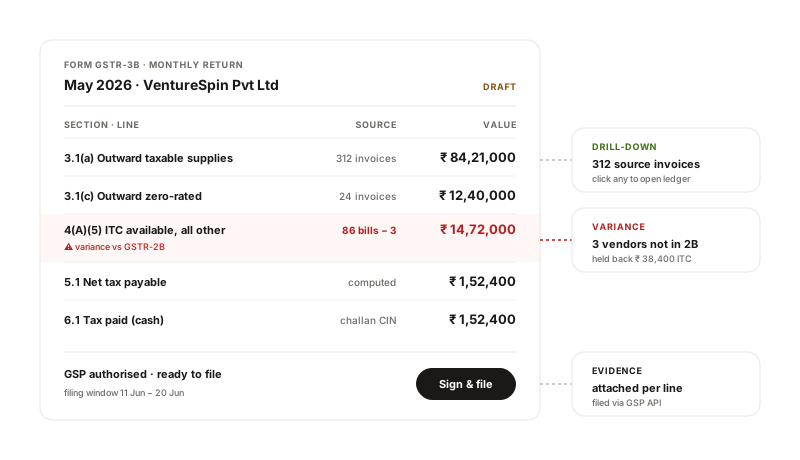
The filing for the period is drafted automatically from your books. Variances flagged with drill-down to source records. Evidence attached per line item, not per filing. Sign off, and the platform files via authorised GSP API.
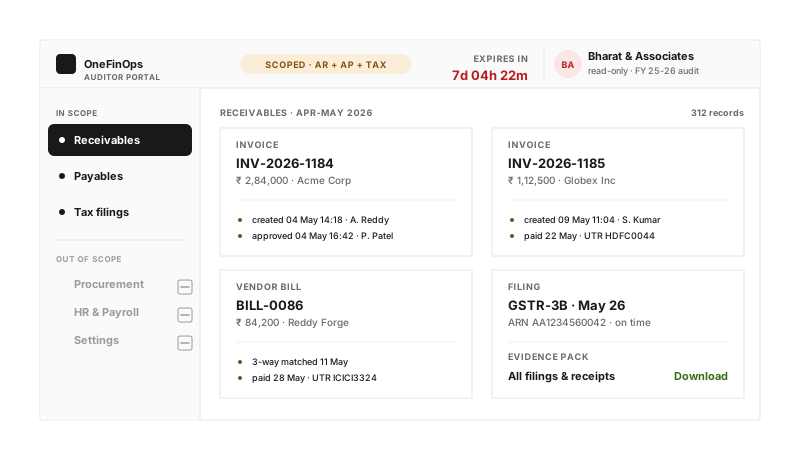
Auditors get a time-bound, scope-limited login. They see only the records, filings and documents within scope. Every view is logged. When the engagement ends, access expires automatically.
GST: GSTR-1, 3B, 9, 9C, IFF (QRMP), GSTR-2B reconciliation, e-invoicing (B2B and reverse charge), e-way bills. Direct tax: TDS challans (24Q, 26Q, 27Q), TRACES reconciliation, Form 16/16A. Statutory: PF (ECR filing), ESI, Professional Tax (multi-state), LWF. ROC: AOC-4, MGT-7, DIR-3 KYC, DPT-3, BEN-2. Multi-country: VAT (UAE, UK, EU), GST (Singapore), US sales tax/1099, UAE Corporate Tax.
OneFinOps connects to the IRP, GSTN portal and the e-way bill system (NIC) via authorised GSP partners. Filings submitted via the GSP API; nothing routes through screen-scraping. Every API call is logged with request/response IDs for audit.
Each GSTIN has its own filing calendar, return drafts and reconciliation. Aggregated views for the CFO; filings stay per GSTIN per state. Multi-state Professional Tax handles per-state slabs, employee residency and challan generation.
Standalone filing tools start from a data upload, you collect data from your books, normalise, feed it in every period. OneFinOps starts from the books themselves. The same invoice that hits AR populates GSTR-1. The same bill that hits AP reconciles against GSTR-2B. No separate data pipeline, no re-keying step. For module-by-module comparisons against specific tools, see the dedicated /compare pages.
Every filing has a per-line-item audit trail back to the source invoice/bill. Sign-offs captured with timestamp and user. Evidence (vendor PDFs, reconciliation reports, GSTN response payloads) attached per filing and accessible to your auditor for the statutory retention period (8 years for GST).
Yes. We track CBIC notifications, CBDT circulars and judicial pronouncements. Rule changes are rolled out within the same FY they are notified, with release notes per change.
A 30-minute walkthrough tailored to your statutory mix and entity structure.