Multi-state GSTINs
Per-state GSTIN with its own GSTR-1, 3B, 9. Each branch books its own sales; central rollup for the group.

High-volume B2B, multi-state GSTINs, bulk vendor reconciliation, channel discounts and end-to-end ITC management. Built for distributors and wholesalers.
A distributor moves thousands of SKUs across hundreds of customers and dozens of vendors per day. Each transaction is small, but at scale the ITC, the multi-state GST and the channel discount maths breaks generic accounting.
Per-state GSTIN with its own GSTR-1, 3B, 9. Each branch books its own sales; central rollup for the group.
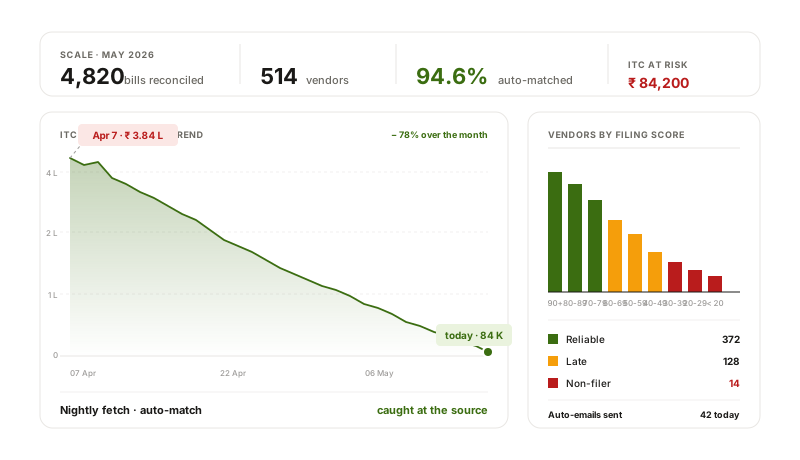
GSTR-2B reconciled at the bill, vendor non-filers flagged, ITC at risk surfaced before the next return.
Vendor settlement reports, channel partner reports, marketplace settlements ingested and matched at scale.
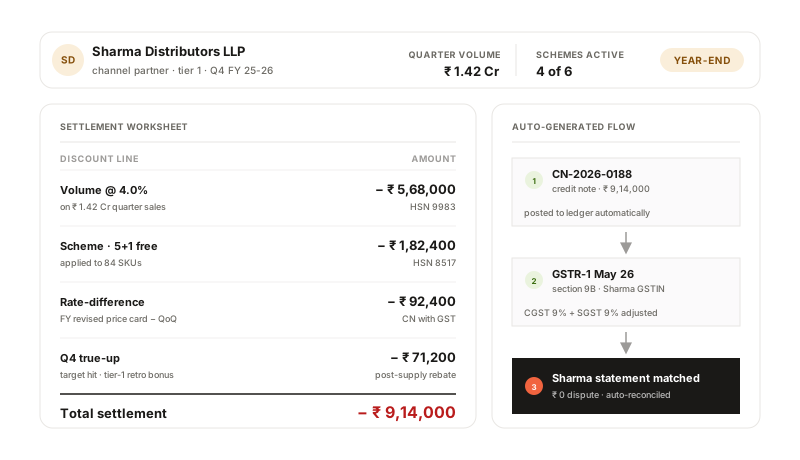
Volume discounts, scheme discounts, rate-difference settlements per channel partner. Auto-computed and posted.
Per-warehouse, per-SKU stock with reorder triggers. Slow-moving and dead-stock dashboards.
Branch-to-branch stock transfers with the correct zero-value invoices and e-way bills.
A distributor with 500 vendors and 5,000 monthly bills used to discover ITC issues during the GSTR-3B push. OneFinOps reconciles every bill against GSTR-2B nightly. Vendor non-filers, mismatched HSN, missing IRNs and amount differences flagged the morning after, not at quarter end.
Channel partners get volume discounts, scheme discounts, year-end rate-difference settlements. Each is an adjustment back to the partner's account, with GST treatment that matters. OneFinOps computes them per partner per scheme, posts the credit notes and updates GSTR-1 cleanly.
Yes. The platform is built for volume, bulk OCR, batch processing, parallel reconciliation. Customers running 30,000+ monthly bills run on Operate or Scale tiers. Performance gets benchmarked at onboarding to ensure your transaction volume is supported.
Volume discounts (post-sale) require a credit note with GST adjustment under Sec 34. Scheme discounts agreed at the time of sale (target-linked) are netted off the original invoice. Rate-difference adjustments (annual true-up) require credit notes with the period-specific GST rate. OneFinOps applies the right treatment per scheme and posts the right credit/debit notes automatically.
Yes. Each vendor has a 12-month filing history score, and bills from non-filers are flagged at posting. The platform drafts follow-up emails per non-filing vendor, tracks responses and surfaces unresolved exposure to the AP Manager. Many distributors recover 1-2% of monthly purchases as ITC that would have been written off.
Same legal entity, different states = different GSTINs = transfer requires a zero-value invoice with the right place-of-supply and an e-way bill. OneFinOps generates these automatically, posts the inward stock at the receiving branch and keeps GSTR-1 (sender) and GSTR-2B (receiver) in sync.
Per-warehouse, per-SKU stock with daily ledger. Reorder triggers per warehouse and per SKU. ABC analysis, slow-moving and dead-stock dashboards. Inventory adjustments for shrinkage / damage with the right journal entries and tax impact.
Bidirectional Tally connector, with up to 36 months of historical data migrated. Vendor and customer master cleanup as part of onboarding. Many distributors run side-by-side for 30-60 days post-cutover before fully migrating; some keep Tally as a backup for years.
A 30-minute walkthrough on your bill volume, vendor count and channel partners.