E-invoicing & IRN
B2B invoices generate IRN automatically; QR and signed PDFs flow to customers.

E-invoicing, e-way bills, ITC-04 job work, multi-location inventory and 3-way matching at scale. Multi-GSTIN groups handled natively.
Manufacturing has goods movement, job work, inter-state transfers, multi-warehouse and multi-GSTIN at every step. Built for it.
B2B invoices generate IRN automatically; QR and signed PDFs flow to customers.
Per-state thresholds tracked; e-way bill auto-generated on dispatch with vehicle and transporter details.
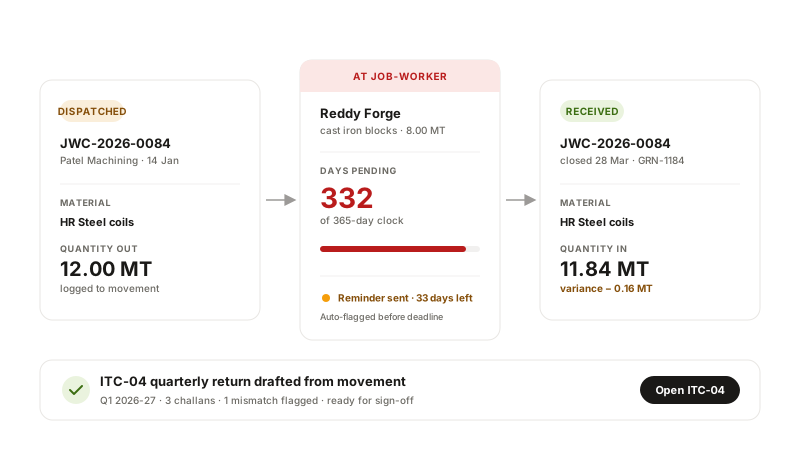
Quarterly job-work return drafted from inventory movements. Inputs sent for processing tracked end to end.
Inter-GSTIN transfers (zero-value invoices) generated correctly. e-way bills, place-of-supply and return flows handled.
Stock by warehouse, by GSTIN, by lot/batch. Reorder triggers per location.
Multi-level BoMs with substitutes and yields. Cost rolls up; finished-goods cost computed automatically.
Inputs sent for job work are tracked from dispatch to receipt. The quarterly ITC-04 is drafted from the inventory movement log; you sign off and file. Mismatches between dispatched, processed and received quantities are flagged with the source GRN.
A finished good moving from your Pune plant to your Bengaluru warehouse is a zero-value invoice between two GSTINs of the same legal entity. We generate the right invoice, the right e-way bill, the right place-of-supply, and reconcile the receiving warehouse's books.
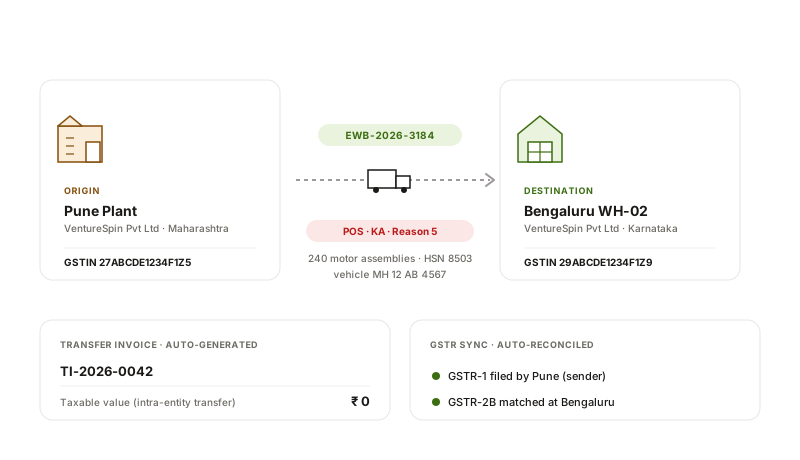
Yes. Each GSTIN is a separate filing entity with its own books, but linked in the group hierarchy. Inter-GSTIN transfers (same legal entity, different states) generate the correct zero-value invoices, e-way bills and place-of-supply. Each GSTIN has its own GSTR-1/2B/3B; the group view rolls up.
Multi-level BoMs with substitutes and yields. Cost rolls up from raw materials to finished goods using either standard cost or weighted-average. Variance analysis (price, usage, mix) per period.
Inputs dispatched for job work tracked per challan. Quarterly ITC-04 drafted automatically from the inventory movement log. Period-overdue inputs (the 1-year for inputs, 3-year for capital goods clock) flagged before the deadline. Job-work charges posted to the right HSN with reverse-charge logic where applicable.
Each state has its own threshold (₹50,000 inter-state; ₹1L or ₹2L intra-state varies). The platform tracks the right threshold per consignment, auto-generates the e-way bill when crossed, and links it to the invoice. Cancellations, extensions and consolidated e-way bills supported.
Production movements (work orders, completions, scrap) can flow in via API. Finished-goods receipts post to inventory; raw-material consumption posts as a manufacturing journal. We integrate with major MES platforms; custom integrations via API.
Tally and SAP integrations are bidirectional. Many manufacturers run OneFinOps as the compliance + AR/AP layer with Tally / SAP as the historical books. Both sides stay in sync; gradual migration is supported.
A 30-minute walkthrough on your GSTIN footprint, BoM complexity and job-work mix.