Invoicing in minutes
Customers, invoices, IRNs (when applicable), receipts. Branded PDFs, payment links, dunning baked in.

Books, billing, compliance and audit trail handled before you hire your first finance person. So when they walk in, they walk into a clean ledger, not a spreadsheet graveyard.
At founding stage you don't need NetSuite. You need clean books, clean billing, on-time compliance and an audit trail that holds up at fundraise diligence.
Customers, invoices, IRNs (when applicable), receipts. Branded PDFs, payment links, dunning baked in.
Forward vendor bills via email. OCR + approval + scheduled payment. TDS deducted automatically.
GSTR-1, 3B, 2B reconciliation, e-invoicing when you cross threshold. Filed via authorised GSP.
TDS deducted at the line item, challans paid, 24Q/26Q filed automatically. Form 16/16A in bulk.
Bank balance, runway, AR, AP. The screen your investor will ask about every quarter.
Per-line audit trail. Evidence per filing. Auditor-scoped views when DD comes knocking.
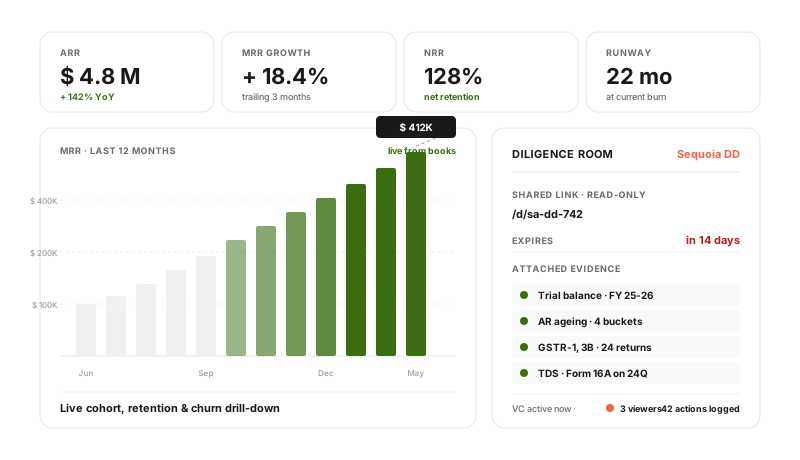
When a VC asks for trial balance, AR aging, vendor list, GSTR filings and audit trail, the answer is one shared link. Auditor-scoped, time-bound, read-only. Diligence that used to take three weeks happens in three days.
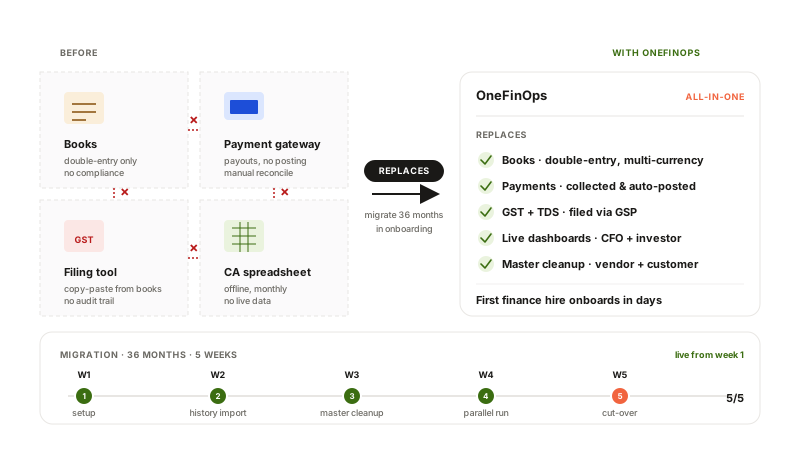
Most startups run finance on a mix of books software, a payment gateway, a separate filing tool and a CA firm. When the first finance hire arrives, they spend 3 months untangling. OneFinOps replaces that mess so the handover is hours, not months.
If you have a GSTIN, you have monthly filings. If you have employees, you have TDS, PF and PT. If you have vendors, you have AP and TDS. Pre-revenue does not mean pre-compliance. Starting on OneFinOps from day one means your first audit and your first fundraise are clean.
Most CA firms run on a desktop ledger plus spreadsheets, send filings via email and bill by the hour. They are great at the filing itself, less great at giving the founder a live cash position or a clean DD pack. OneFinOps and a CA partner is the right split: software does the bookkeeping and reconciliation, the CA reviews and signs off. Many CA firms run their own clients on OneFinOps.
Zoho Books is good basic bookkeeping. OneFinOps adds the deeper compliance (GSTR-2B reconciliation, TDS automation, e-invoicing as a built-in feature, multi-state PT) and the AR/AP workflows (3-way matching, smart dunning) that startups eventually need. We migrate from Zoho with the historical data; many startups graduate to us when the manual workflows start hurting.
Yes, for many startups. Bills come in, you approve, the platform does the rest. GST and TDS filings are drafted; you sign off. The audit trail makes month-end review fast. As you grow you bring in an accountant, then a CA, then a controller, and they all use the same platform.
A 30-minute walkthrough on your books, your filings and the DD pack your next round will ask for.