Period locks
Soft-lock for review, hard-lock after sign-off. Retroactive edits gated by approval and logged.

Period locks, intercompany eliminations, FX revaluation and reconciliations run inline. The controller signs off on a draft, not on a JE marathon.
Every step that drags out a typical month-end is automated, instrumented and audit-ready.
Soft-lock for review, hard-lock after sign-off. Retroactive edits gated by approval and logged.
Inter-entity invoices and bills auto-eliminated at consolidation. Suspense and elimination accounts maintained per entity pair.
Multi-currency balances revalued at month-end with auto-posted FX gain/loss to your chart.
Bank, AR, AP, intercompany and tax reconciliations run continuously, not at month-end.
See and edit only what your role and entity scope allow. SOX-style segregation of duties enforced.
Every transaction has a source, every edit has an actor and timestamp. Period-bound reports for the audit team.
The close-cycle dashboard shows what is reconciled, what is pending and what needs review. Controllers march through the checklist, knowing each item ties back to source records and a timestamped sign-off.
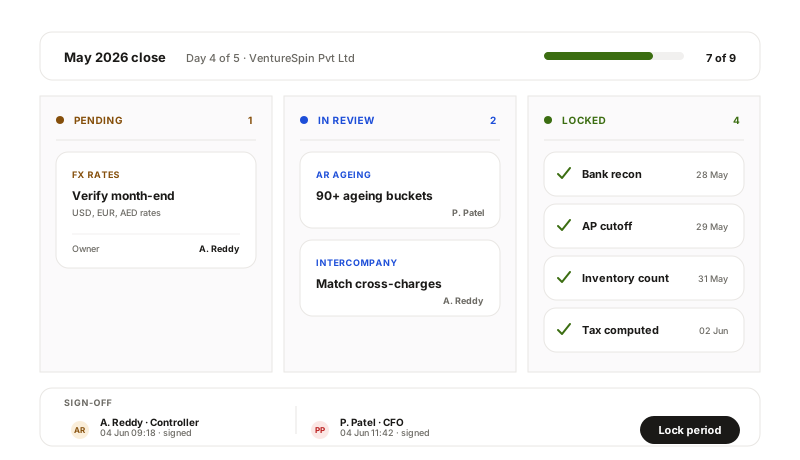
Two states per period: soft-lock (review) and hard-lock (closed). Soft-lock prevents transaction creation in the period; controllers can edit while reviewing. Hard-lock requires an approval workflow to reopen. Every edit during soft-lock is logged with actor and reason.
Inter-entity invoices and bills carry an intercompany flag. At consolidation, both legs are eliminated and the difference posts to a configurable elimination account per entity pair. Profit-in-stock eliminations are supported for inventory transfers.
Yes. Local statutory books per entity follow local GAAP (Ind AS, US GAAP, IFRS, FRS). The consolidation layer applies group GAAP adjustments. Side-by-side views supported.
Per-line-item, per-edit audit trail with source records linked. Exportable per period. Auditor-scoped access without sharing internal tools. Many controllers find the trail more accessible than NetSuite saved searches because every record links to source documents.
Manual JEs allowed with mandatory description and supporting evidence. Templates for recurring JEs (depreciation, accruals, prepayments). Auto-reversal on the next period for accruals. Approval workflows per JE type and amount.
A 30-minute walkthrough of the close workflow on your group, your entities and your calendar.