
Blog
GST
Returns, input tax credit, e-invoicing, and 2B reconciliation. Practical GST guidance from the team that files hundreds of returns every month.
 GST GSTR-9 and GSTR-9C: Applicability, Due Date and Late Fees GSTR-9 is mandatory above ₹2 crore turnover and GSTR-9C above ₹5 crore. Both are due 31 December 2026 for FY 2025-26. OneFinOps Editorial 3 min
  GST GSTR-2B vs GSTR-3B Reconciliation: How to Match ITC GSTR-2B vs GSTR-3B reconciliation checks that the ITC you claim in Table 4 of GSTR-3B agrees with GSTR-2B, with every difference explained. OneFinOps Editorial 3 min
  GST E-Invoice Applicability and Turnover Limit under GST E-invoicing applies to every GST-registered business whose PAN-level aggregate turnover crossed ₹5 crore in any year since 2017-18. OneFinOps Editorial 3 min
 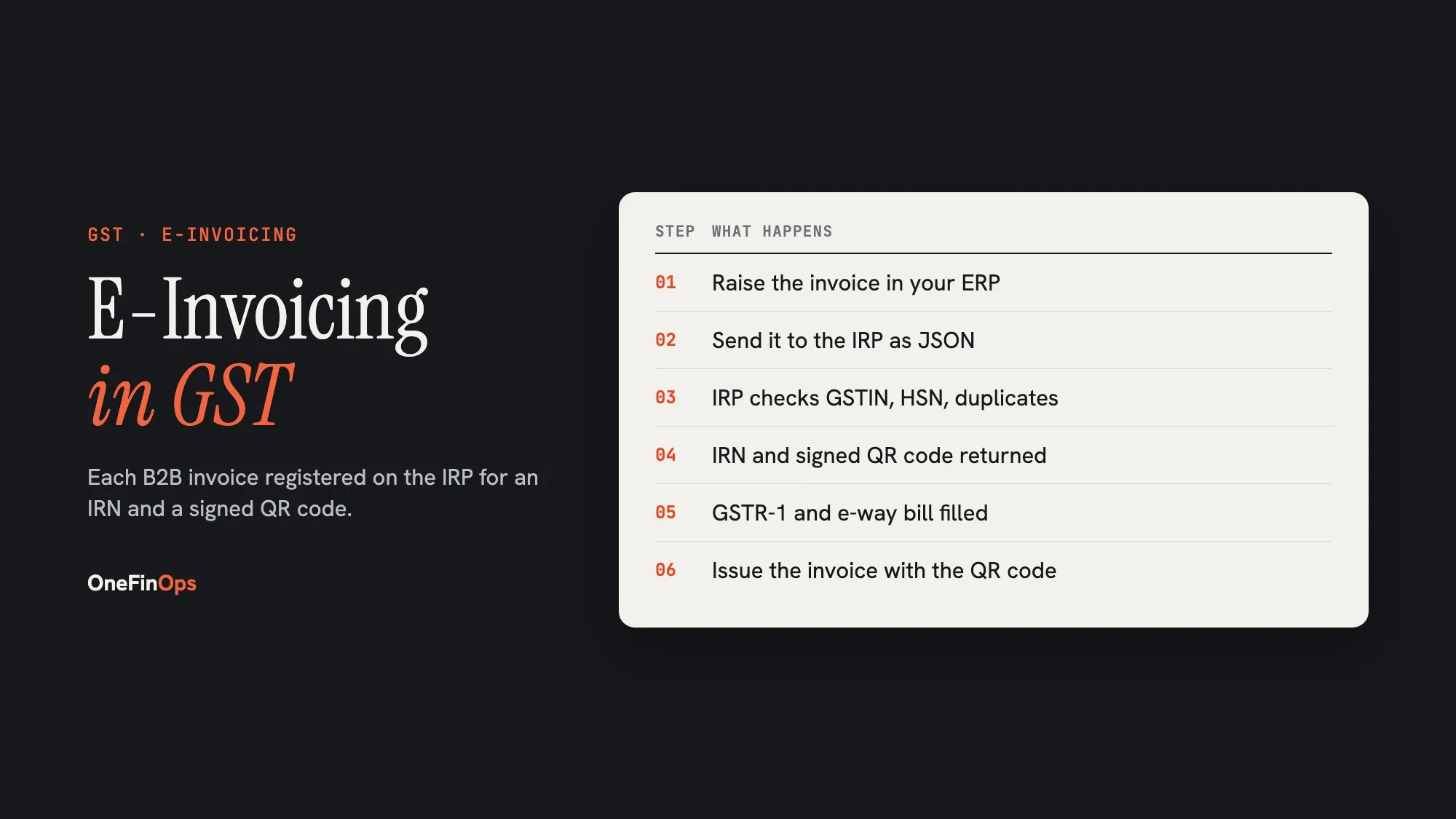 GST What is E-Invoicing in GST? IRN, Process and Rules E-invoicing in GST means reporting each B2B invoice to a government Invoice Registration Portal, which validates it and returns an IRN and a signed QR code. OneFinOps Editorial 3 min
  GST What is Input Tax Credit in GST? Conditions, Example and Rules Input tax credit is the GST paid on business purchases that you deduct from the GST you owe on sales, if the section 16 conditions are met. OneFinOps Editorial 3 min
  AP Invoice Processing in Accounts Payable: Steps and Automation Invoice processing is how a business receives, checks, codes, approves and books supplier invoices before payment, including GSTIN, e-invoice and TDS checks. Dhatri Medarametla 3 min
  GST GST Reconciliation: Meaning, Types, Process and Excel Format GST reconciliation is matching your books with GST returns: sales with GSTR-1, purchases with GSTR-2B, and both with GSTR-3B, before you file. OneFinOps Editorial 3 min
 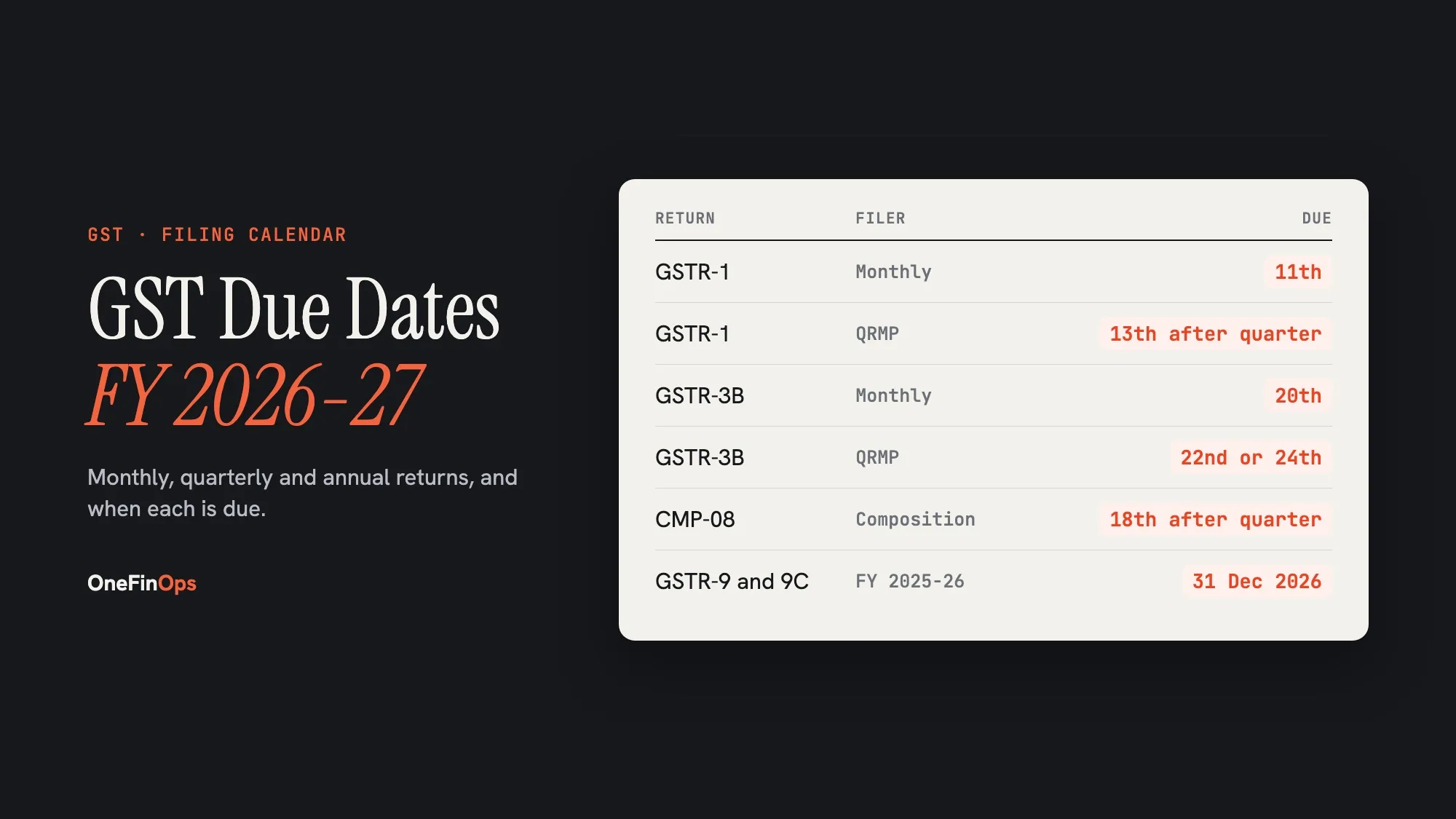 GST GST Due Dates FY 2026-27: GSTR-1, GSTR-3B and GSTR-9 Calendar GST due dates FY 2026-27: GSTR-1 by the 11th, GSTR-3B by the 20th, QRMP GSTR-3B by the 22nd or 24th, and GSTR-9 for FY 2025-26 by 31 December 2026. OneFinOps Editorial 3 min