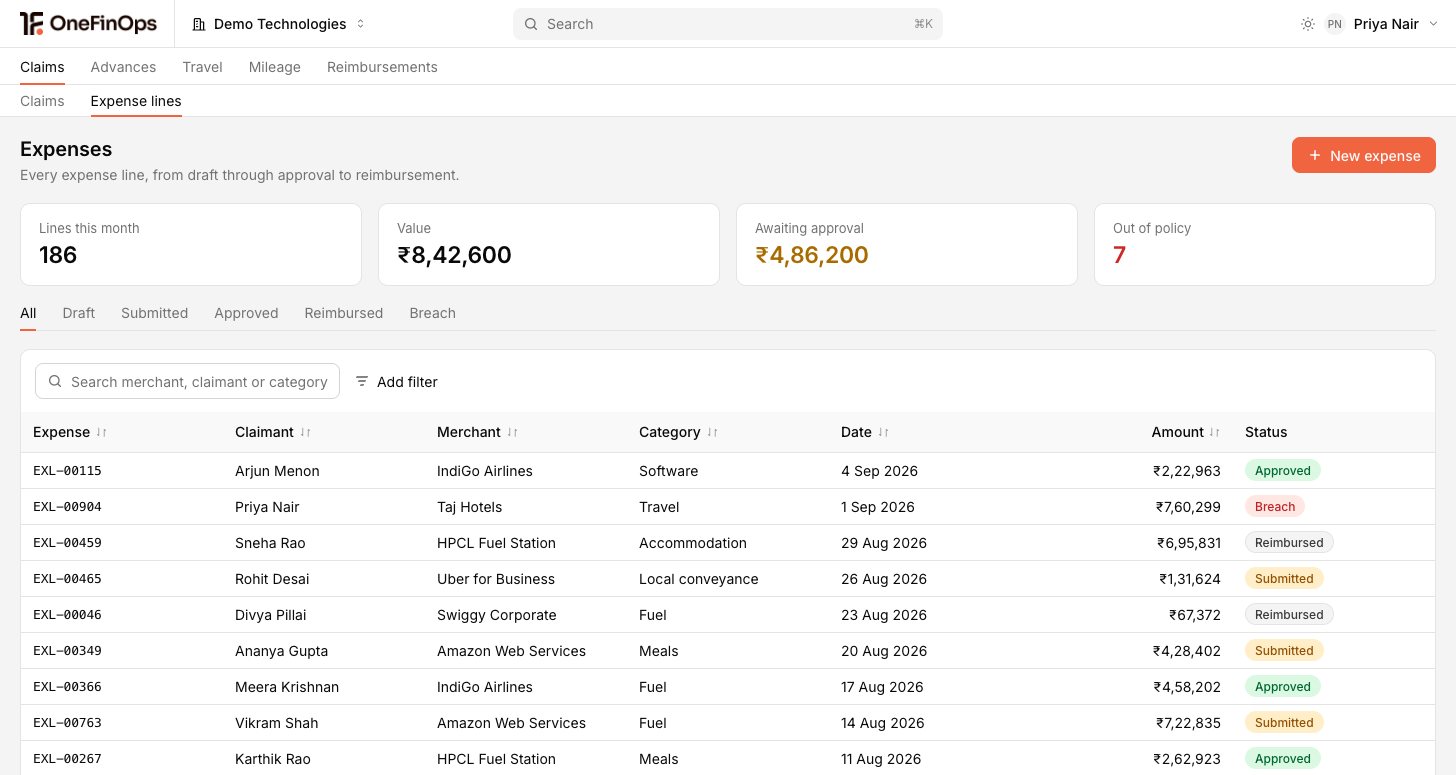

Expenses
From receipt to reimbursement, on policy.
Phone photos with OCR and GSTIN extraction. Policy enforced at submission. Corporate cards auto-reconciled, GST ITC captured on every B2B-eligible expense.
Mobile Receipt Capture
Phone photo to submitted expense in 30 seconds.
Photograph the receipt. OCR reads merchant, amount, date and GST. The GSTIN on the invoice is captured automatically. Category suggested from the merchant. Policy check runs before submission. The employee submits a complete expense, not a draft.
Policy Engine
Policy enforced at submission, not at approval.
Per-category, per-employee-level, per-trip-purpose limits enforced on the expense form. Over-limit needs justification plus a higher-tier approver. Section 10(14) per-diem rules built in. The AP team reviews compliant expenses; the policy stops the rest.
Corporate Card Reconciliation
Card statement reconciled monthly. Not at year-end.
Direct API feeds from HDFC, ICICI, Axis, SBI Card and AmEx India. Card transactions auto-match against employee-submitted expenses. Mismatches surface for follow-up. The card statement reconciles to the books every month, not at FY-end.
Mileage Tracking
GPS trips, tax-free under Section 10(14).
Trip starts and ends from the mobile app. GPS captures the route; the employee reviews and submits. Rate per kilometre auto-applied per company policy. Tax-free up to the Section 10(14) prescribed rate; excess flagged for tax adjustment.
Expense Approvals
Approvals that route themselves.
Rules by amount, project, cost-centre and employee level. Slack DM for the manager, email for the controller, WhatsApp for the CFO who is travelling. Out-of-office auto-escalation. Mobile approve in one tap. Audit trail per Rule 11(g). Travel-week claims do not sit in someone's inbox.
GST ITC on Expenses
GST ITC on every B2B-eligible expense.
GSTIN on the invoice flagged at capture. ITC eligibility validated per Section 16. Hotel, taxi, restaurant, software and other B2B-eligible expenses route to GSTR-2B reconciliation. Personal expenses correctly excluded from ITC.
Travel Expense Reports
One trip, one report.
Trip created at the outset captures purpose, dates, cities and project. All expenses on the trip group automatically. Per-diem applied per Section 10(14) for the cities visited. Reimbursement settles against the trip advance. The CFO sees trip cost vs budget.
Petty Cash Management
Petty cash that reconciles. Branch by branch.
Petty cash float per branch. Daily expenses logged with receipt; running balance tracked. Replenishment requested when the threshold hits. Monthly reconciliation closes the loop. Audit trail per Rule 11(g).
Virtual & Corporate Cards
Cards issued in minutes.
Virtual and physical cards issued via Volopay, Happay or EnKash partnerships. Per-employee limits, per-category limits, MCC-block lists. Cards cancel automatically on leave or termination. Spend reconciles against expenses live.
Travel Advance & Settlement
Travel advance, settled on return.
Travel advance issued before the trip posts as a receivable on the employee. Expenses logged during the trip settle against the advance on return. Net payable or receivable computed. Outstanding advances per employee surface on the AR ageing. Section 269ST enforced.
At scale
Expenses, by the numbers.
receipt to submitted expense
policy enforcement at submission
GST ITC captured on B2B-eligible expenses
HDFC, ICICI, Axis, SBI, AmEx India direct feeds
Buyer FAQ
What teams ask before they switch.
Which Indian corporate cards are supported?
HDFC, ICICI, Axis, SBI Card and AmEx India have direct API feeds. Standard Chartered, Yes Bank, IndusInd are supported via standardised statement upload (CSV / Excel). New issuers add quarterly as APIs become available. CSV upload remains the universal fallback.
How does GPS mileage tracking work without invading privacy?
GPS tracks only during a "trip" the employee starts and ends from the mobile app. The map is shown for review; the employee can edit the start, end or route before submission. Mileage rate auto-applied per company policy. Tax-free per Section 10(14) where the rate is within the prescribed limit.
How is GST ITC captured on travel expenses?
Hotel, taxi, restaurant and software expenses with the company GSTIN on the invoice are flagged as ITC-eligible. The OCR captures the GSTIN; the system validates at submission; the ITC carries through to GSTR-2B reconciliation. Mismatched GSTIN (employee's personal GSTIN, vendor GSTIN typo) flagged before submission.
Section 10(14) per-diem rules. Are they enforced?
Yes. Section 10(14) per-diem rates (₹1,500 per day for domestic travel under the standard rules, higher for senior employees per company policy) are enforced at submission. Excess over the prescribed rate is taxable in the employee's hands; the system flags the excess and posts the tax adjustment.
International travel and FX. How is it handled?
Multi-currency expenses are first-class. Foreign-currency receipts post in the original currency with the FX rate at the receipt date (RBI reference rate by default). Reimbursement is in INR. The audit trail captures the FX rate and the conversion. Form A2 (for outbound remittance) drafts where applicable.
Can we enforce per-employee-level limits at submission?
Yes. Per-category, per-employee-level, per-trip-purpose limits are enforced on the expense form. Over-limit submissions require justification plus a higher-tier approver. The CFO sees over-limit approvals on a daily dashboard.
Travel advance and settlement. Workflow?
Cash advance issued against an upcoming trip; the advance posts as a receivable on the employee. On return, expenses settle against the advance; net payable or receivable computed. Section 10(14) tax treatment applied. Outstanding advances per employee surface on the AR ageing.
Connect one corporate card. Run last week's expenses through the policy engine.
Free trial, one entity. Connect HDFC / ICICI / Axis / SBI corporate card. Forward last week's receipts. The policy check, the GST ITC capture and the card-reconciliation match all run on screen.