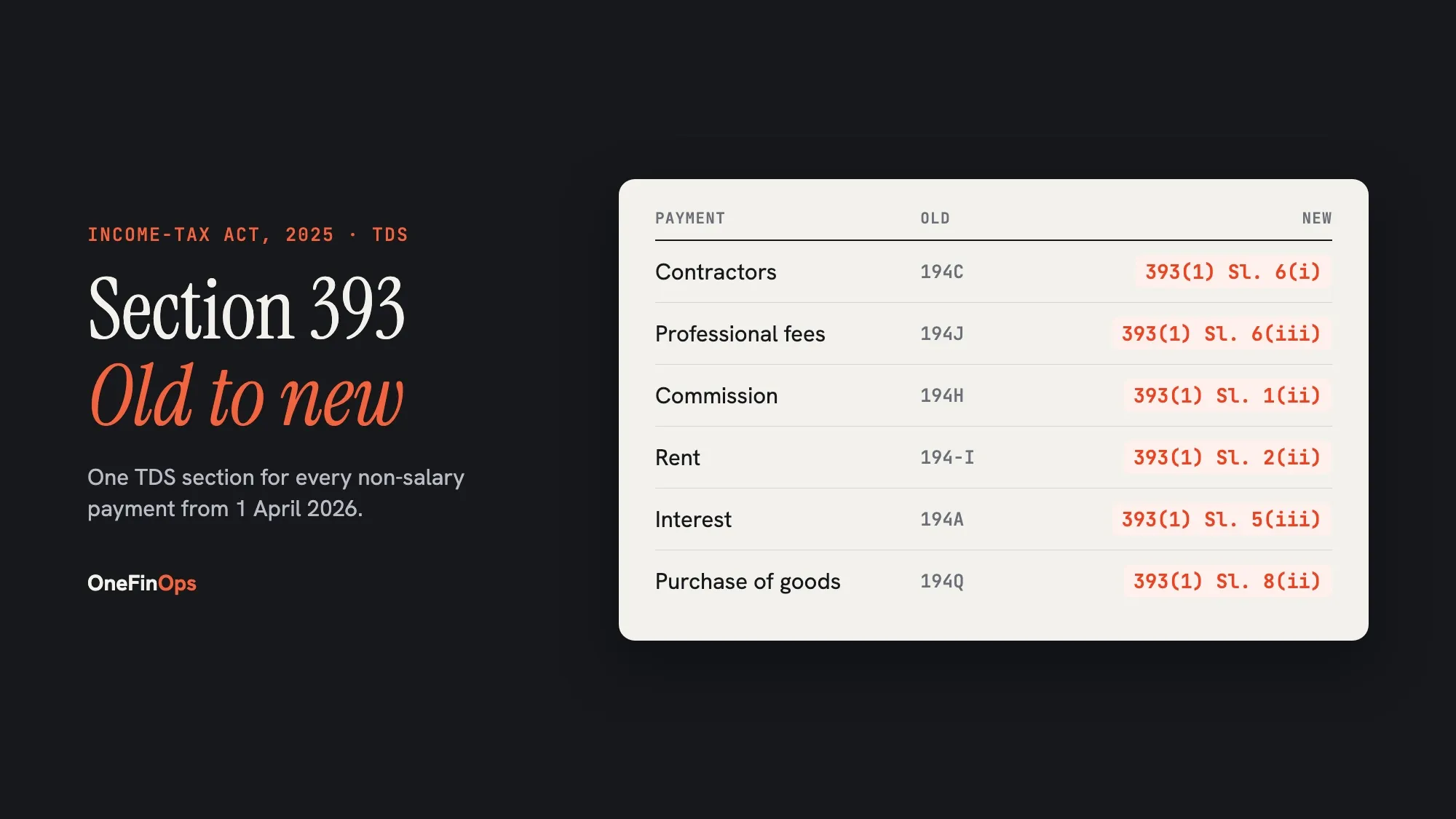
A lower TDS certificate is an order from the Assessing Officer that lets a payer deduct tax at source at a lower rate, or not at all, because the payee’s estimated tax is lower than normal TDS. From 1 April 2026 you apply in Form 128 (earlier Form 13) under section 395(1). For the payer, the risk is deducting at the lower rate after the limit runs out.
In OneFinOps, the certificate sits on the vendor record and is applied to each bill it covers, within its rate, dates and amount.
Key takeaways
- Section 395(1) replaces section 197; Form 128 replaces Form 13.
- The certificate names the deductor, rate, period and maximum amount.
- It cannot undo TDS already deducted, so apply early.
What is a lower TDS certificate?
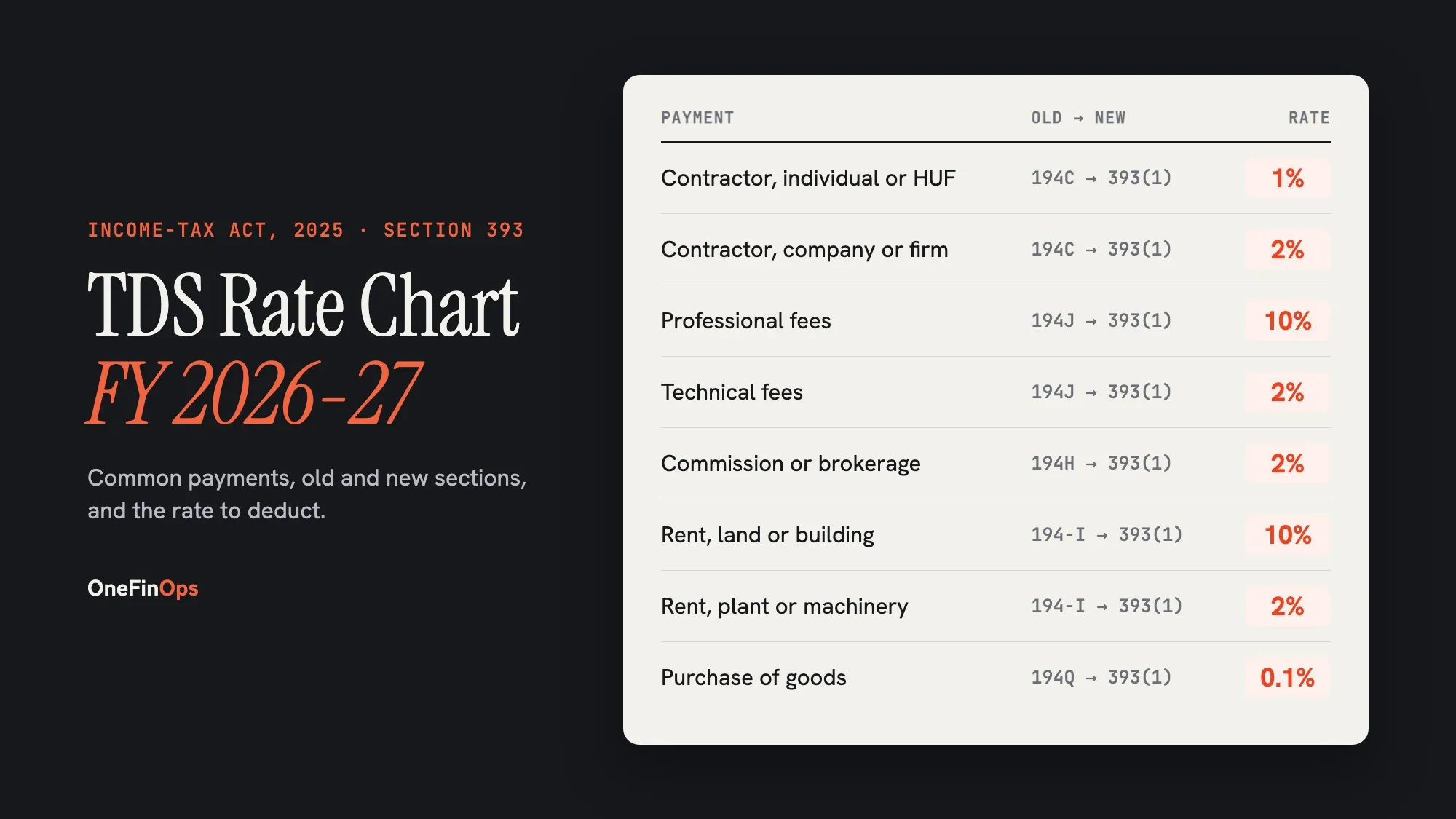
TDS rates are flat. A consultancy billing ₹5 crore suffers 10% TDS whether it makes a profit or a loss, and the excess is locked up until its return is processed. The Assessing Officer looks at your estimated income and, if satisfied, tells each named payer to deduct at a set rate until the certificate expires or its amount is used.
| Pinnacle Infra Consultants LLP, fees ₹3,00,00,000 | Without certificate | With certificate |
|---|---|---|
| TDS rate on professional fees | 10% | 1% (as certified, illustrative) |
| TDS withheld in the year | ₹30,00,000 | ₹3,00,000 |
With taxable income of ₹30,00,000 after set-off, Pinnacle has ₹27 lakh more in hand through the year.
How to apply for a lower TDS certificate in Form 128
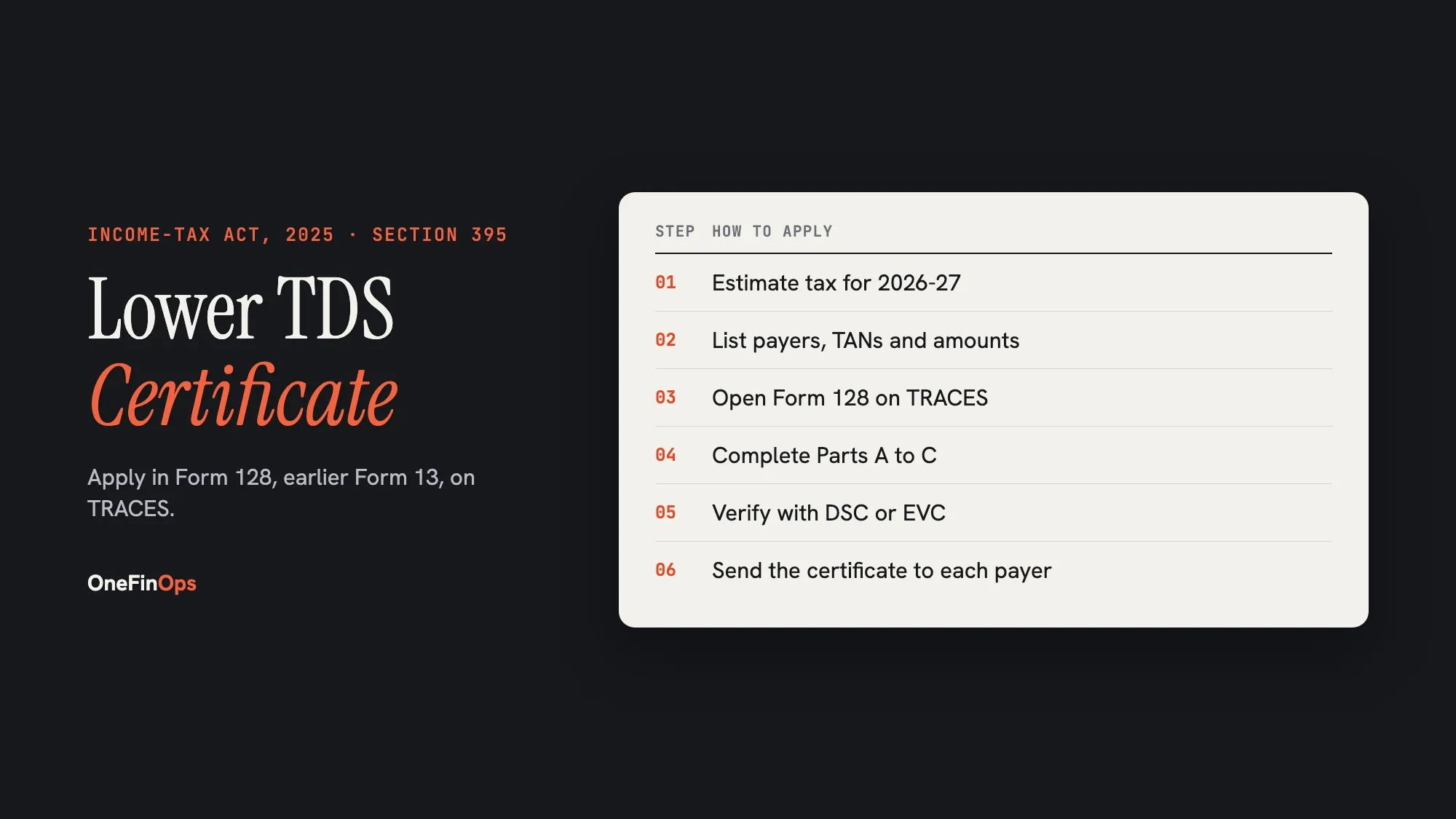
- Estimate the year: a projected profit and loss account and tax computation for tax year 2026-27.
- List your payers (name, TAN, nature of payment, expected amount) and gather recent returns and financial statements.
- Log in to TRACES (tdscpc.gov.in) with your PAN and open Form 128.
- Complete Parts A to C, the relevant declaration and the annexures.
- Verify with DSC or EVC, submit, and answer queries on the portal.
- Download the certificate and send it to each named payer before their next payment.
What the deductor must do with a lower TDS certificate
Verify it on TRACES, apply the certified rate only to payments of that nature within the period and amount, and quote the certificate number in Form 140 (or Form 144 for non-residents). Switch back to the normal rate when it expires or the limit is used. Deducting low without a valid certificate brings interest under section 398 and a 30% expense disallowance under section 35(b).
How OneFinOps applies lower TDS certificates
In OneFinOps, lower deduction certificates and exemptions are applied automatically as the Payables Agent codes each bill to its tax treatment, so the certificate is read from the record, not from someone’s memory of an email. The Tax Agent prepares the quarterly statement and reconciles it to the ledger. The return goes to the named preparer and reviewer before it is filed.
Where the certificate lives in a folder and the deduction in a separate TDS tool, the two drift. Here they share one record.