


Subscription Billing | Usage-Based Billing
Meter it, rate it, bill it.
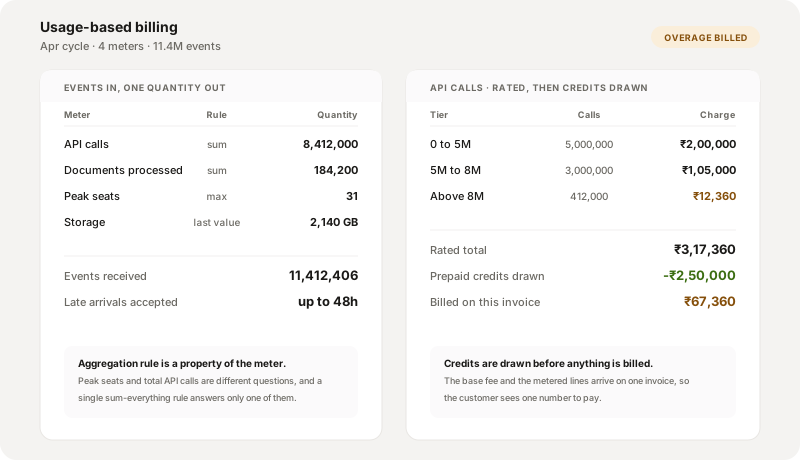
Ingest usage events, aggregate by sum, max or last value, and rate them on flat, per-unit, tiered, volume or stairstep pricing. Overage settles at the end of the cycle. Pre-paid credits draw down as usage lands. A subscription can mix a recurring base fee, entitlements and metered overage on one invoice.
What the system does
Capability, input, output.
| Capability | Input | Output |
|---|---|---|
| Usage ingestion | API events per subscription item, timestamped | Raw records stored against the meter for the cycle |
| Aggregation | Sum, max or last-value rule per meter | A single quantity figure ready for rating at cycle close |
| Pricing models | Flat, per-unit, tiered, volume or stairstep rate table | A computed charge applied to the aggregated quantity |
| Overage | Usage above the plan allowance | Overage charge settled on the invoice at cycle end |
| Pre-paid credits | Credit balance loaded to the subscription | Credits drawn down as usage lands, overage billed when exhausted |
| Hybrid billing | Base plan fee plus one or more metered components | One invoice combining the recurring charge and all usage lines |
-
Usage ingestion
- Input
- API events per subscription item, timestamped
- Output
- Raw records stored against the meter for the cycle
-
Aggregation
- Input
- Sum, max or last-value rule per meter
- Output
- A single quantity figure ready for rating at cycle close
-
Pricing models
- Input
- Flat, per-unit, tiered, volume or stairstep rate table
- Output
- A computed charge applied to the aggregated quantity
-
Overage
- Input
- Usage above the plan allowance
- Output
- Overage charge settled on the invoice at cycle end
-
Pre-paid credits
- Input
- Credit balance loaded to the subscription
- Output
- Credits drawn down as usage lands, overage billed when exhausted
-
Hybrid billing
- Input
- Base plan fee plus one or more metered components
- Output
- One invoice combining the recurring charge and all usage lines
Standards + connections
Usage billing wired to the systems that rate, collect and book it.
A metered charge is still a real invoice line. Usage totals post to receivables as the system of record, tax is computed once by the ledger, and revenue recognises on the period, so the usage engine never keeps a second copy of your numbers.
Regulations we work within
-
AR is the system of record
Each cycle posts a real invoice to receivables with all usage lines itemised; the billing engine keeps the link, not a duplicate revenue figure.
-
IFRS 15 and Ind-AS 115
Variable consideration from metered usage is allocated to the performance obligation in the period it is earned, not when the cycle closes.
-
Audit trail
Every usage event, aggregation run and rating decision is logged with timestamp, so the charge on any invoice is fully traceable back to the raw events.
Connects to
- Accounts Receivable Usage lines as invoice items, receipts and credit notes
- Pricing Catalog Rate tables pulled live from the plan at cycle close
- Accounting Deferred and recognised revenue for variable fees
- Payments Auto-charge or net-terms settlement per subscription
Usage-Based Billing FAQ
What buyers ask.
How does the engine know how much to charge at the end of the cycle?
Usage events are ingested via API throughout the cycle and stored against the meter. At cycle close the engine applies the aggregation rule you set for that meter (sum, max or last value) to arrive at a single quantity, then rates it against the price table on the plan. The resulting charge posts as a line on the invoice.
Can we mix a fixed monthly fee with a metered overage on the same subscription?
Yes. A subscription item can carry a recurring base charge alongside one or more metered components, each with its own meter and rate model. At billing time the cycle generates one invoice that lists the base fee and each usage line together, so the customer sees a single document.
What pricing models are supported for the metered portion?
Five models are available: flat fee (a fixed amount if any usage is recorded), per-unit (rate multiplied by quantity), tiered (different rates applied to successive quantity bands, blended on the invoice), volume (the band the total quantity falls into sets the rate for the whole quantity), and stairstep (each band is charged as a flat fee and bands stack). You pick the model per meter in the plan catalog.
How do pre-paid credits interact with usage charges?
Credits are loaded to the subscription and drawn down as usage events land and are rated. When the credit balance reaches zero, further usage charges bill normally at the end of the cycle. The customer and your team can see the remaining credit balance at any time, and the ledger reflects the drawdown as the usage accrues.
More in Subscription Billing
Related features
Pricing & Plans
Product families, plans, add-ons, price tiers and entitlements, all configured, not coded. Launch a new plan or grandfather an old one without a release.
See Pricing & PlansRecurring Billing
Monthly, quarterly, annual or custom cycles that renew on schedule and generate the next invoice without anyone touching it.
See Recurring BillingSubscription Analytics
MRR, churn and net revenue retention computed off the same subscriptions you bill, not a separate analytics import.
See Subscription Analytics
See usage land on an invoice in real time.
Send a few usage events via API, watch the meter aggregate them, and see the rated charge land on the cycle invoice posted to receivables, end to end.