


Subscription Billing | Subscription Analytics
MRR, churn and net revenue retention, off the live book.
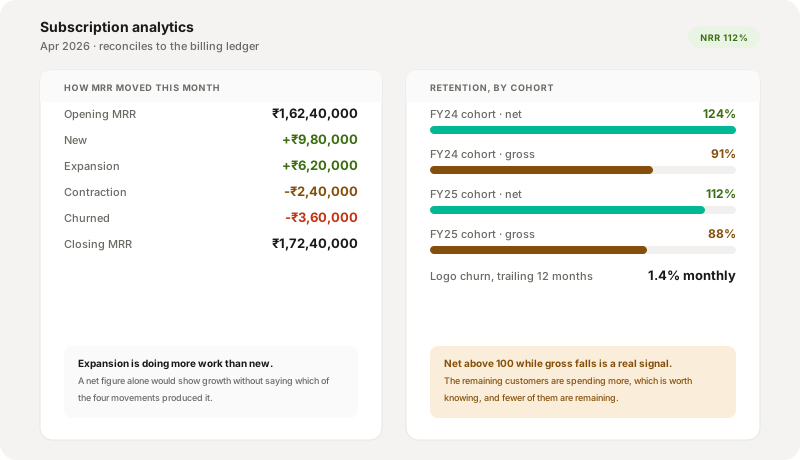
New, expansion, contraction and churned MRR broken out by plan and cohort. ARR, net and gross retention, and lifetime value, computed from the same subscriptions you bill, not a separate analytics import, so the numbers reconcile to billing every time.
What the system does
Metric, source, output.
| Capability | Input | Output |
|---|---|---|
| MRR movement | New, expansion, contraction and churned subscriptions | MRR waterfall by plan and cohort, period over period |
| ARR | Live subscription values annualised | ARR at a point in time, trended by month |
| Net revenue retention | Starting cohort MRR vs ending MRR including expansion | NRR and GRR percentages, per cohort and overall |
| Customer lifetime value | Average MRR and average subscription lifespan | LTV per plan and segment, updated on the billing cycle |
| Churn rate | Cancelled and expired subscriptions in the period | Logo and revenue churn, gross and net |
| Board-ready exports | Date range, plan, segment filters | CSV and PDF views that reconcile to the billing ledger |
-
MRR movement
- Input
- New, expansion, contraction and churned subscriptions
- Output
- MRR waterfall by plan and cohort, period over period
-
ARR
- Input
- Live subscription values annualised
- Output
- ARR at a point in time, trended by month
-
Net revenue retention
- Input
- Starting cohort MRR vs ending MRR including expansion
- Output
- NRR and GRR percentages, per cohort and overall
-
Customer lifetime value
- Input
- Average MRR and average subscription lifespan
- Output
- LTV per plan and segment, updated on the billing cycle
-
Churn rate
- Input
- Cancelled and expired subscriptions in the period
- Output
- Logo and revenue churn, gross and net
-
Board-ready exports
- Input
- Date range, plan, segment filters
- Output
- CSV and PDF views that reconcile to the billing ledger
Standards + connections
Metrics wired to the billing and revenue systems that produce them.
Analytics here are not a separate import. Every MRR figure is derived from the same subscription records the billing engine charges on, so the number your board sees ties out to the invoice your customer received.
Regulations we work within
-
Single source of truth
MRR and ARR are computed from live subscription data, so a plan change or cancellation is reflected in the next metrics run without a manual sync.
-
IFRS 15 and Ind-AS 115
Recognised and deferred revenue figures in the analytics view reconcile to the recognition schedules on the ledger, not a parallel estimate.
-
Audit trail
Each metric snapshot is linked to the subscription and invoice events that produced it, so any figure can be traced to its source.
Connects to
- Subscription Billing Live plan and subscription state as the metrics source
- Accounts Receivable Invoice and payment data for cash-basis reconciliation
- Revenue Recognition Deferred and recognised revenue tied to analytics views
- Usage-Based Billing Metered overage included in MRR and LTV calculations
Subscription Analytics FAQ
What buyers ask.
How is MRR calculated and does it match what we bill?
MRR is derived directly from your live subscription records, so the figure you see in analytics is the same one the billing engine charges on. There is no separate import or reconciliation step. A plan change, upgrade or cancellation updates the MRR waterfall in the next metrics run.
What is the difference between gross revenue retention and net revenue retention?
Gross revenue retention measures how much starting MRR you kept, counting only contraction and churn, with a ceiling of 100 percent. Net revenue retention adds expansion MRR from upgrades and add-ons, so it can exceed 100 percent when your existing customers grow faster than you lose others. Both are computed per cohort and overall.
Can we break MRR down by plan or customer segment?
Yes. The MRR waterfall can be filtered by plan, product family or any segment dimension on the subscription. New, expansion, contraction and churned buckets are shown for each slice, so you can see which plans are driving growth and which are losing ground.
Do the analytics numbers tie out to our invoices and the ledger?
They do. Because the metrics are computed from the same subscription and invoice records that the billing and recognition engines use, ARR and recognised revenue reconcile without a separate export. Any figure in a board export can be traced back to the invoice or subscription event that produced it.
More in Subscription Billing
Related features
Subscription Management
Trials, upgrades, downgrades, pauses, add-ons and cancellations on one timeline, with entitlements that update the moment a plan changes.
See Subscription ManagementUsage-Based Billing
Ingest usage events, aggregate by sum, max or last value, and rate them on flat, per-unit, tiered, volume or stairstep pricing.
See Usage-Based BillingRevenue Recognition
Deferred revenue and recognition schedules derived from the subscription term, tied out to the ledger under IFRS 15 and Ind-AS 115.
See Revenue Recognition
See your MRR waterfall reconcile to billing.
Run a cohort through new, expansion and churned MRR and watch the figures tie out to the invoices and recognition schedules on the same platform.