


Subscription Billing | Revenue Recognition
Bill on the cycle, recognise on the period.
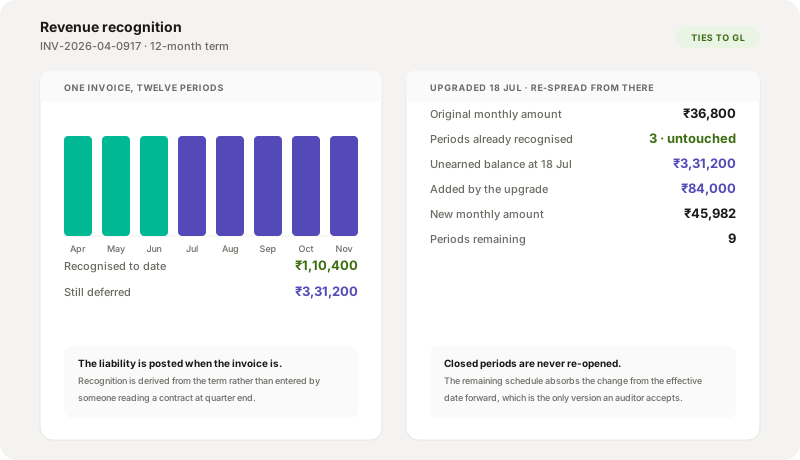
Deferred revenue and recognition schedules are derived from the subscription term, not maintained by hand. Upgrades and credits re-spread automatically. A revenue waterfall shows recognised versus deferred over time, and the result reconciles to the ledger.
What the system does
Capability, input, output.
| Capability | Input | Output |
|---|---|---|
| Recognition schedule | Subscription term and billing date | Period-by-period deferred and recognised amounts derived automatically |
| Deferred revenue posting | Invoice raised ahead of the service period | Liability posted on billing, released on the correct period |
| Upgrade and downgrade re-spread | Mid-cycle plan change or credit | Remaining schedule recalculated from the effective date forward |
| Revenue waterfall | Active subscription portfolio | Recognised versus deferred view across periods and plans |
| Ledger reconciliation | Recognition entries and invoice lines | Recognised revenue that ties out to the general ledger without a manual step |
| Performance obligation mapping | Plan and add-on definitions | Obligation identified and allocated per the 5-step model |
-
Recognition schedule
- Input
- Subscription term and billing date
- Output
- Period-by-period deferred and recognised amounts derived automatically
-
Deferred revenue posting
- Input
- Invoice raised ahead of the service period
- Output
- Liability posted on billing, released on the correct period
-
Upgrade and downgrade re-spread
- Input
- Mid-cycle plan change or credit
- Output
- Remaining schedule recalculated from the effective date forward
-
Revenue waterfall
- Input
- Active subscription portfolio
- Output
- Recognised versus deferred view across periods and plans
-
Ledger reconciliation
- Input
- Recognition entries and invoice lines
- Output
- Recognised revenue that ties out to the general ledger without a manual step
-
Performance obligation mapping
- Input
- Plan and add-on definitions
- Output
- Obligation identified and allocated per the 5-step model
Standards + connections
Revenue recognised to the standard, posted to the ledger.
Recognition is not a spreadsheet job. Schedules are derived from the subscription term, entries are generated on the right period, and the result reconciles to the books under IFRS 15 and Ind-AS 115 to your entity.
Regulations we work within
-
IFRS 15 and Ind-AS 115
The 5-step model, performance obligations and transaction price allocation are reflected in the schedule the engine derives from each subscription term.
-
ASC 606
US GAAP revenue recognition follows the same 5-step framework; the engine applies the same schedule logic for entities reporting under ASC 606.
-
Audit trail
Every recognition entry carries the source invoice, the subscription, the period and the rule applied, so the trail is complete without a reconstruction.
Connects to
- Accounts Receivable Invoice is the billing source of record
- Accounting Deferred and recognised entries post to the ledger
- Subscription Management Term and plan changes flow into the schedule
- Reporting Revenue waterfall and period breakdown
Revenue Recognition FAQ
What buyers ask.
How is the recognition schedule generated?
The schedule is derived from the subscription term on each invoice. When a customer pays annually up front, the engine splits the recognised amount across the service periods and posts the deferred liability at billing, releasing it on each period without a manual journal.
What happens to the schedule when a customer upgrades or downgrades?
The remaining schedule is recalculated from the effective date of the change. The credit for any unused portion and the new obligation for the revised plan are spread forward automatically, so the waterfall stays accurate without a manual correction.
Which standards does the engine support?
IFRS 15, IFRS 15 and Ind-AS 115 and ASC 606 all follow the same 5-step model. The engine applies that model when deriving performance obligations and allocating the transaction price, so entities reporting under any of the three frameworks get a schedule consistent with the standard.
How does recognised revenue reconcile to the ledger?
Each recognition entry carries the source invoice, the subscription and the period. Because billing and the ledger are one platform, the entries post directly to the general ledger, and the recognised total ties out to the books without a separate reconciliation step.
More in Subscription Billing
Related features
Recurring Invoicing
Each billing cycle posts a real invoice to receivables, with tax computed by the ledger and e-invoicing raised on the same document.
See Recurring InvoicingSubscription Analytics
MRR, churn and net revenue retention computed off the same subscriptions you bill, not a separate analytics import.
See Subscription AnalyticsSubscription Management
Trials, upgrades, downgrades, pauses, add-ons and cancellations on one timeline, with entitlements that update the moment a plan changes.
See Subscription Management
See recognition schedules generated from your subscription terms.
Bring a subscription with an annual term, raise the invoice, and watch the deferred revenue post, release by period, and reconcile to the ledger under IFRS 15 and ASC 606.